
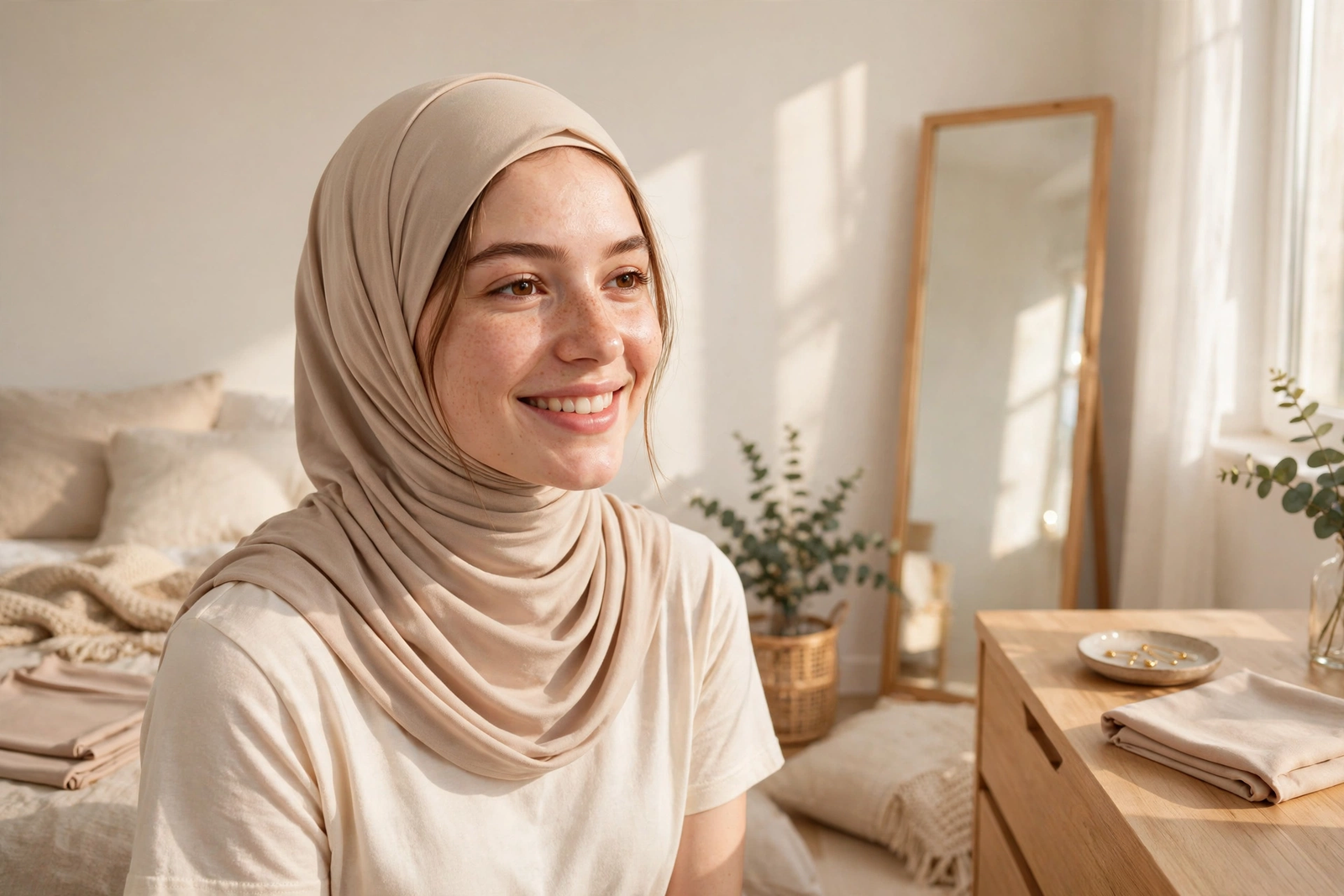
Learning how to wear hijab for beginners step by step can feel overwhelming at first, but every confident hijabi started exactly where you are today. This beginner guide breaks the process into simple, manageable steps so you never feel lost in front of the mirror again.
You’ll learn which fabrics are easiest to handle, the tools that make styling effortless, and four simple styles you can master this week. By the end, you’ll have practical fixes for every common beginner struggle — and the confidence to wear your hijab with calm, quiet pride.
In This Guide
Choosing Your First Hijab: Best Fabrics for Beginners
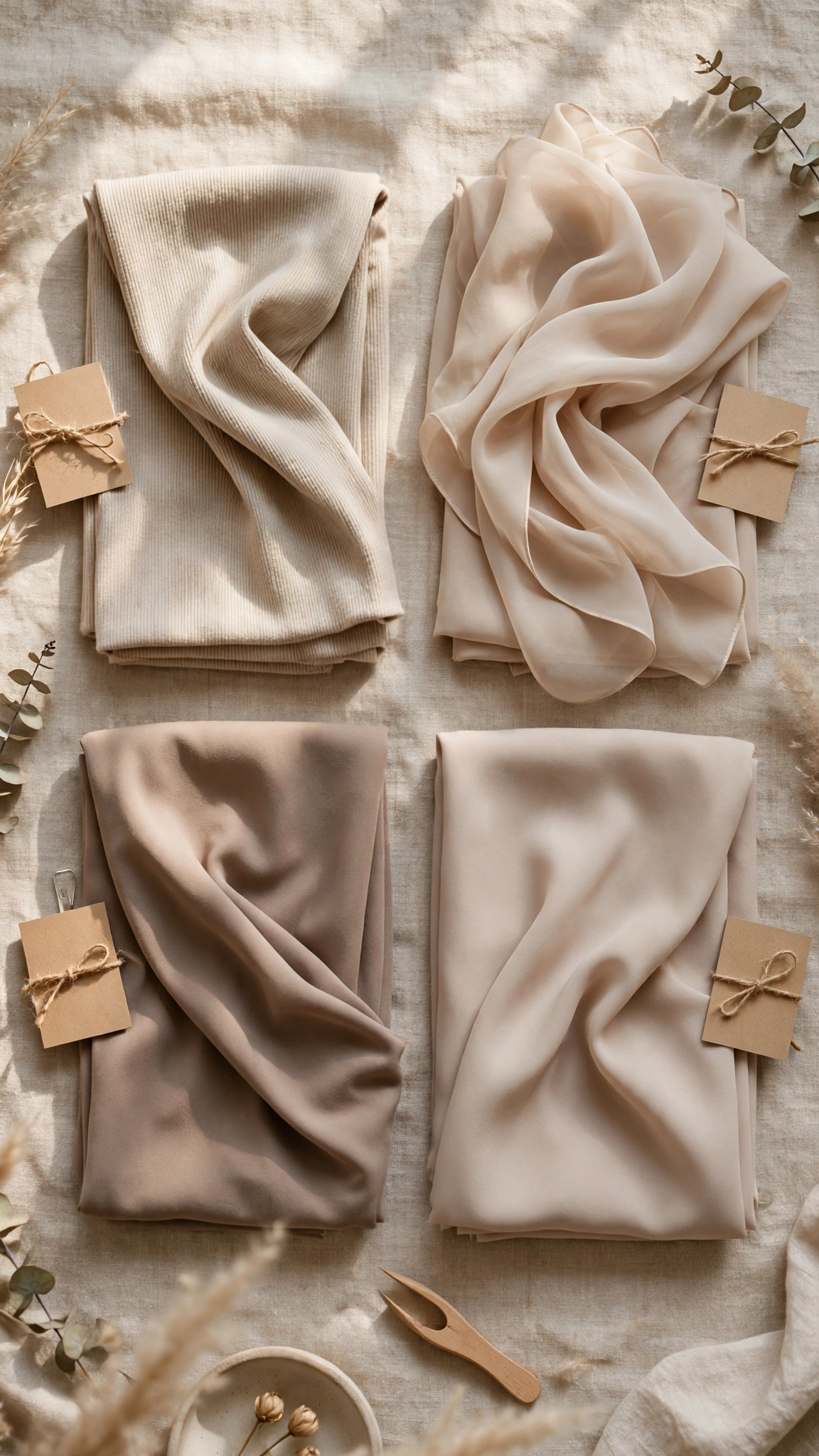
Start with fabrics that forgive mistakes: jersey, modal, and woven viscose. These grip your hair and undercap naturally, need almost no ironing, and drape without sliding off your shoulders. Chiffon and silk-look satin are beautiful but slippery, so save them for later when your hands know the moves. Choose a rectangular wrap around 70 by 28 inches, which gives enough length for a comfortable front drape. Hold the fabric against your cheek in the store — if it feels soft and stays put on your skin, it is beginner-friendly.
Buy just two or three hijabs to start, in versatile neutrals like black, warm beige, and soft taupe that match most outfits. Skip the cheap ten-packs online — they are often cut unevenly and fray after one wash. Check the hem: a narrow rolled edge lasts longer than a raw cut. Rub the fabric across your forearm; if it slides right off, it will slide off your head too. Pre-wash every new hijab before wearing it, since sizing chemicals make fresh fabric extra slippery and stiff.
What You Need: Pins, Underscarves and Magnets
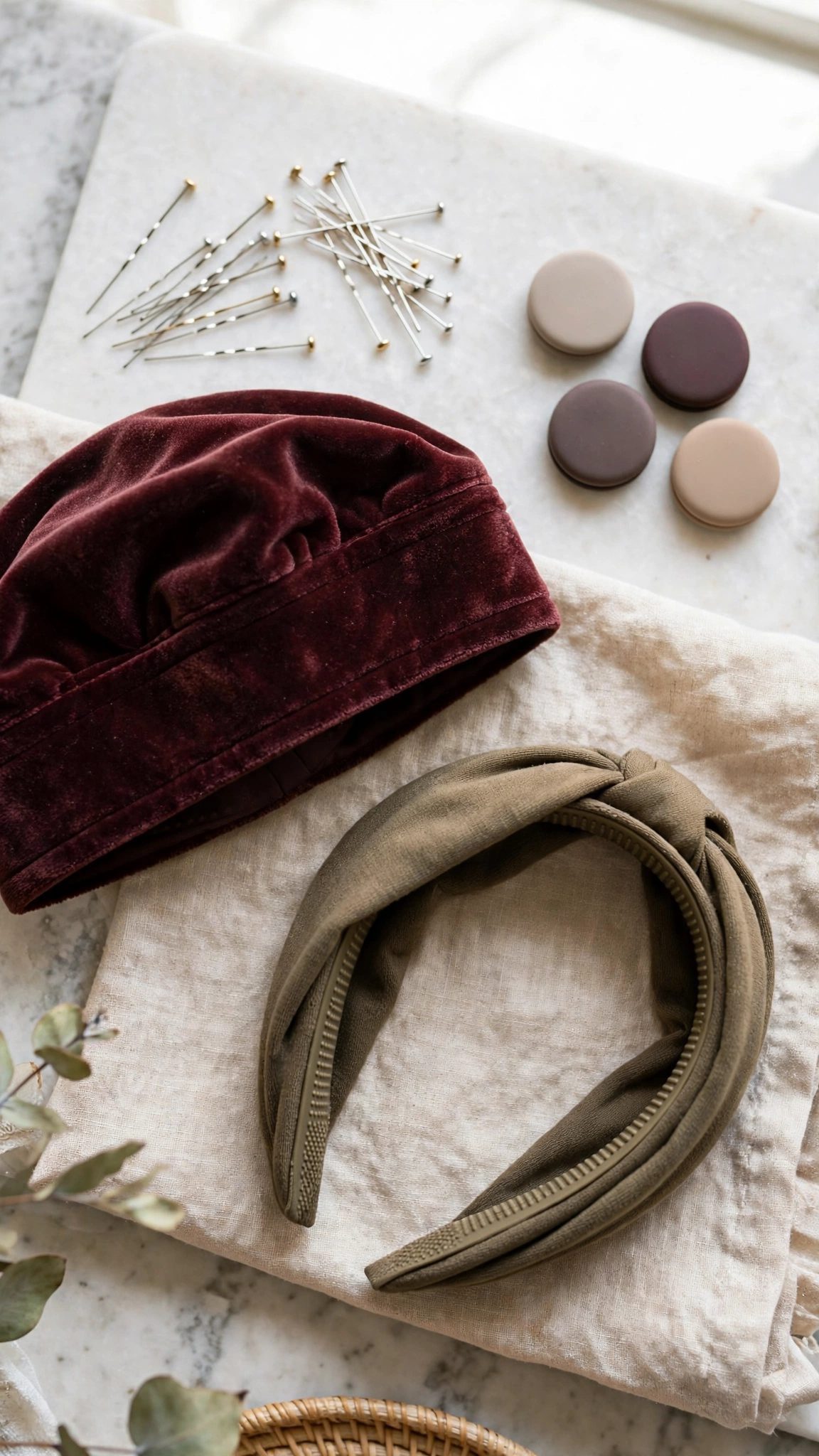
Three small tools make hijab styling dramatically easier. Straight pins with pearled or glass heads are your daily workhorse — get at least fifteen, because pins vanish like socks. Safety pins secure layers discreetly at the shoulder or chest. A cotton tube underscarf (also called a bonnet cap) grips slippery fabrics and keeps hair fully covered underneath. Hijab magnets — small paired discs — hold fabric together without piercing it, which saves delicate chiffon from holes. A no-slip velvet headband is a welcome bonus for windy days. Start simple and upgrade later.
Always pin through two layers of fabric rather than one — a single layer tears and the pin pops open. Slide straight pins in horizontally under your chin so the sharp tip points away from your skin. Keep magnets in a pair on your vanity; separated magnets are useless and easy to lose. Choose underscarves in nude or black to match your hijab, and buy the non-slip style with a silicone or velvet strip if you wear a lot of chiffon. Wash new underscarves — factory starch makes them slide for the first few wears.
The Classic Wrap: Step-by-Step
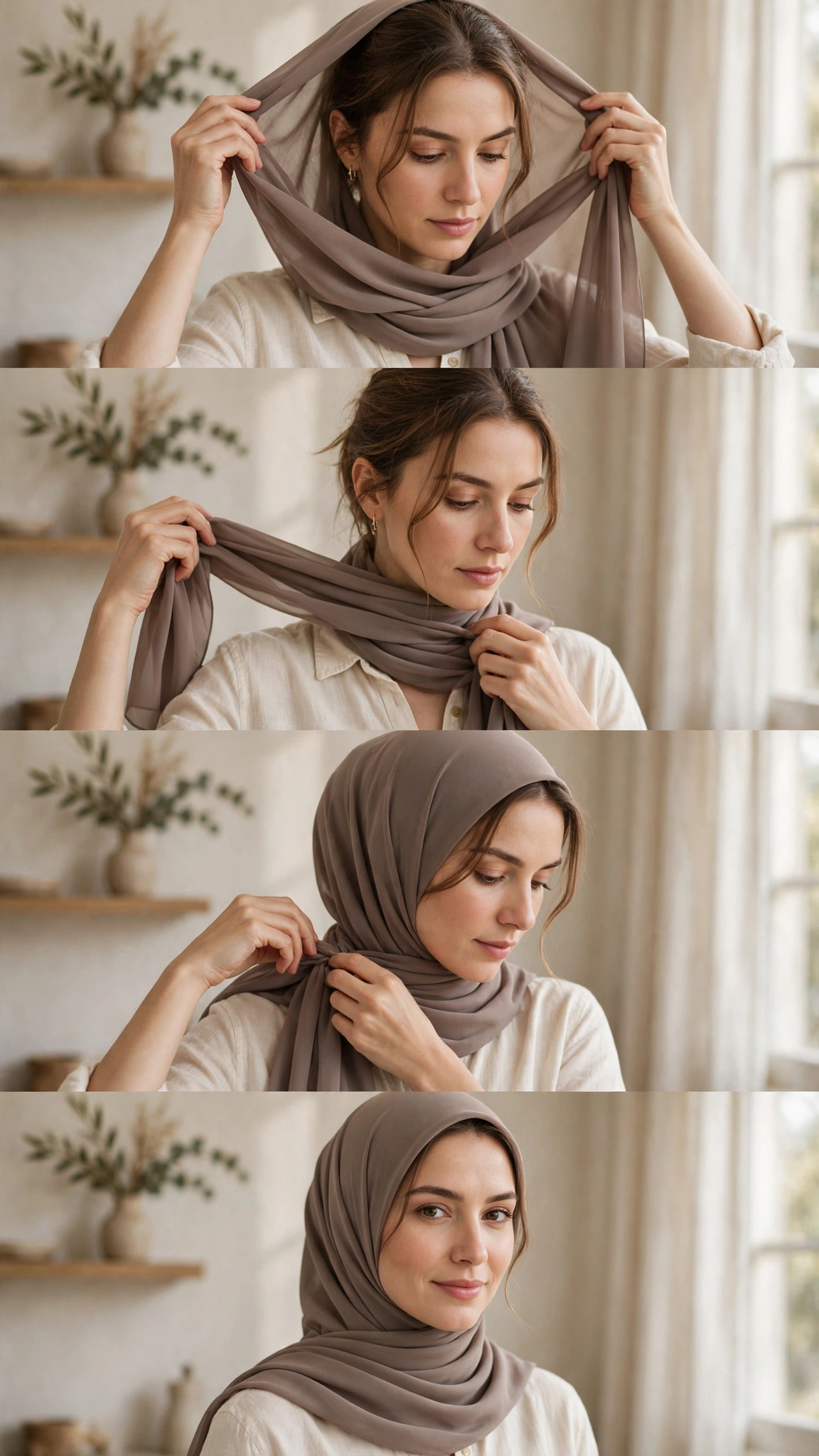
Put on your underscarf and pull it over your forehead. Drape the hijab over your head with one side twice as long as the other — a two-to-one ratio. Pin the fabric snugly under your chin, catching the underscarf edge so nothing shifts. Take the long side, bring it across your chest and up over the opposite shoulder, then secure it near your temple or at the crown with a second pin. Let the short side fall behind your shoulder. Smooth the front drape with your palms and check the back in a mirror.
Practice this style with a jersey hijab first — its stretch forgives uneven draping. Stand facing a mirror with light on your face, not behind you, so you can actually see the folds. Leave four to six inches of fabric hanging past your chin on the short side; anything shorter pulls the whole wrap lopsided. If the neckline gapes when you sit, add a small safety pin at the collarbone. Remember how to wear hijab for beginners step by step the relaxed way, since tension causes headaches and fabric creep.
The No-Pin Style for Busy Mornings
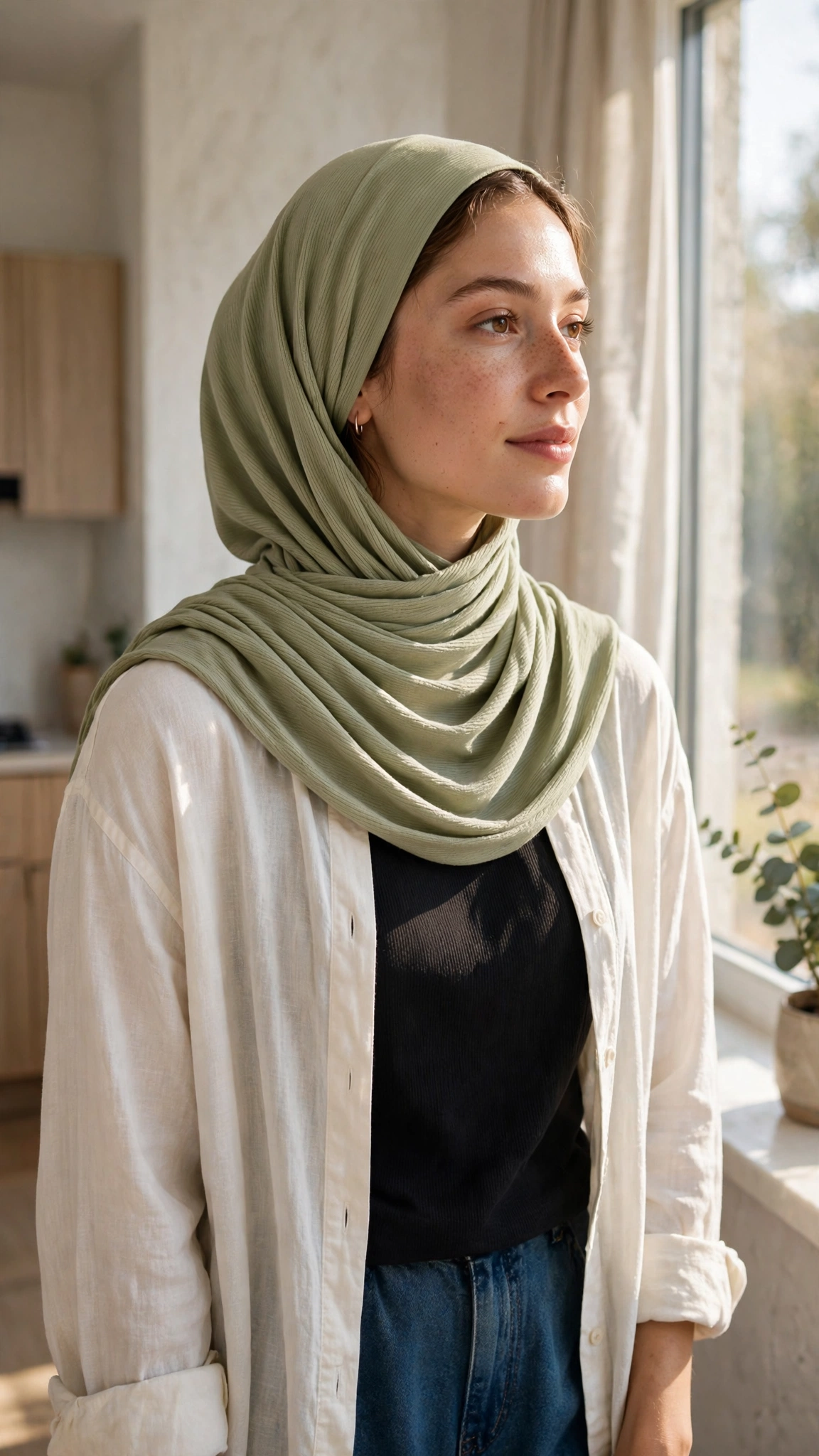
The no-pin style uses fabric tension instead of hardware. Fold a stretchy jersey hijab in half lengthwise, place the folded edge at your hairline, and cross both ends behind your neck. Pull the ends forward over opposite shoulders and tuck each end firmly under the opposite side of the wrap — the tuck is what locks everything. Alternatively, buy a pre-sewn instant hijab: pull it on like a hood, adjust the face opening, and you are done in thirty seconds. The built-in inner band does the gripping work for you.
This style only works with grippy, stretchy fabrics — jersey, modal, or ribbed knit. Slippery chiffon will unravel by lunchtime without pins. Keep the two sides roughly equal in length so the weight balances and nothing drags sideways. Check your back coverage with a phone camera or second mirror before leaving; the tuck method can ride up at the nape without you feeling it. On windy days, add one hidden magnet pair at the shoulder as insurance. Re-tuck after removing a coat, scarf, or seatbelt. Two minutes of practice makes it automatic.
How to Get Full, Comfortable Chest Coverage
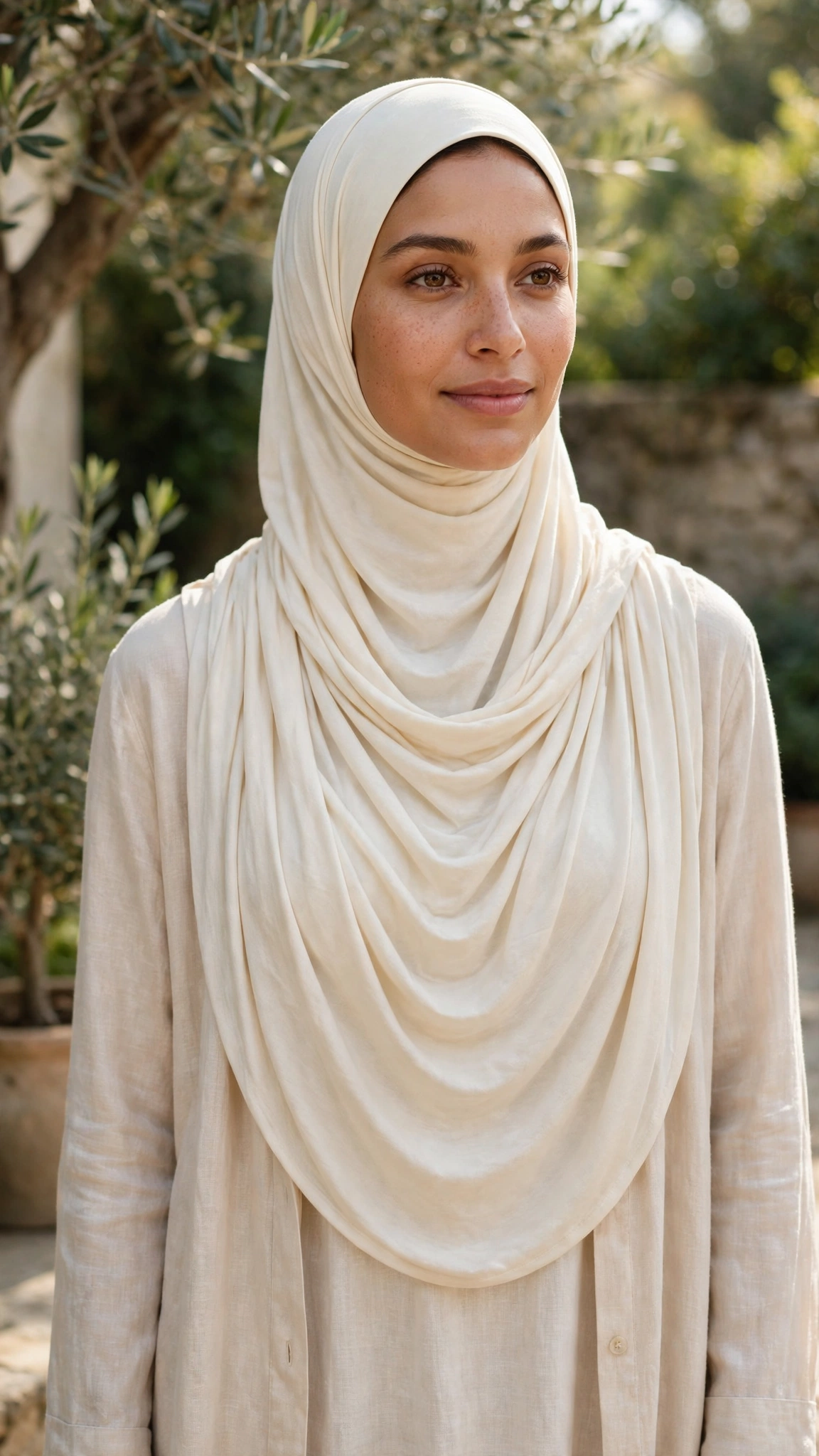
Comfortable chest coverage starts with size: choose wraps at least 70 inches long so the front panel can fall well past your collarbone. After pinning under your chin, bring the long side across your body and let it hang straight down your front instead of wrapping it tightly around your neck. The fabric should end around mid-torso and move freely when you walk. Secure it with a pin at the shoulder or just below the collarbone — hidden inside a fold — so a gust of wind cannot flip it open.
Do the sit-down test: sit in a chair and lean forward — if the drape slides off your chest, the fabric is too short or too slippery for this style. With thin or light-colored hijabs, wear an opaque underscarf and a non-sheer top, because daylight reveals more than indoor mirrors do. For extra security, layer a second shorter hijab over the first as an under-drape. Keep the front panel at least eighteen inches below your chin for a modest, balanced silhouette that still looks effortless. Measure once, then trust the drape.
Styling for Your Face Shape
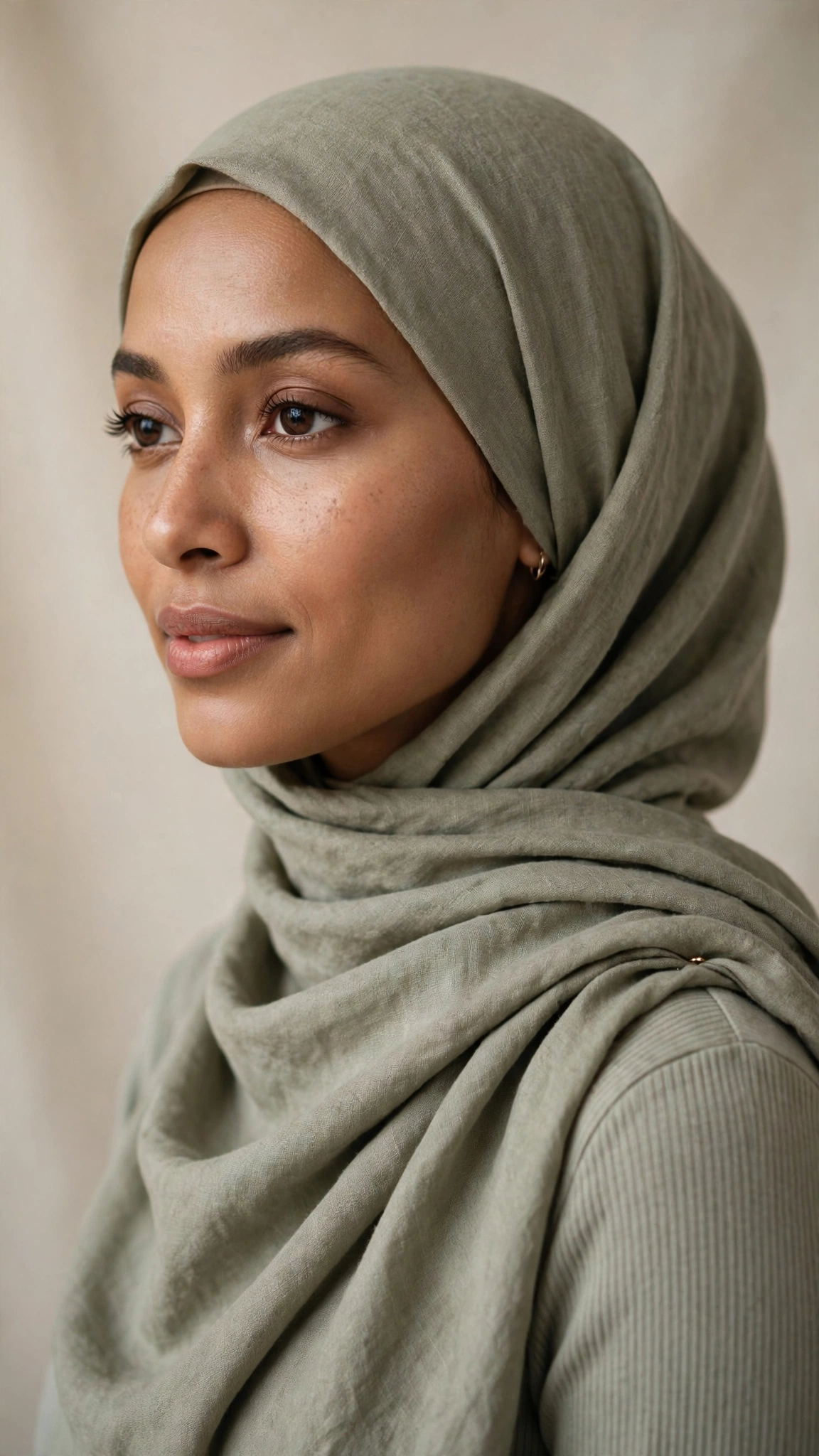
Think framing, not flattening: your hijab should follow your bone structure. Oval faces suit almost every style, so experiment freely. Round faces look slimmer with a little height at the crown and a visible band of forehead — avoid wrapping the fabric flat against your cheeks. Long faces benefit from fuller fabric at the sides and a lower, softer hairline. Heart-shaped faces look balanced when the drape adds gentle width around the jaw. Hold a hand mirror at arm’s length to judge your proportions honestly. Small tweaks make a big difference.
Your underscarf shape changes everything: a pointed or peaked cap visually lengthens round faces, while a rounded cap softens angular ones. Keep the drape slightly loose around the face — fabric pulled drum-tight emphasizes every curve you might want to downplay. A small velvet scrunchie or volume bun under the crown adds flattering height for flat or long faces. Photograph yourself from the front and side after styling, because the camera reveals lopsided folds your mirror hides. Adjust once, then stop fidgeting — trust your first good drape.
Keeping Your Hijab in Place All Day
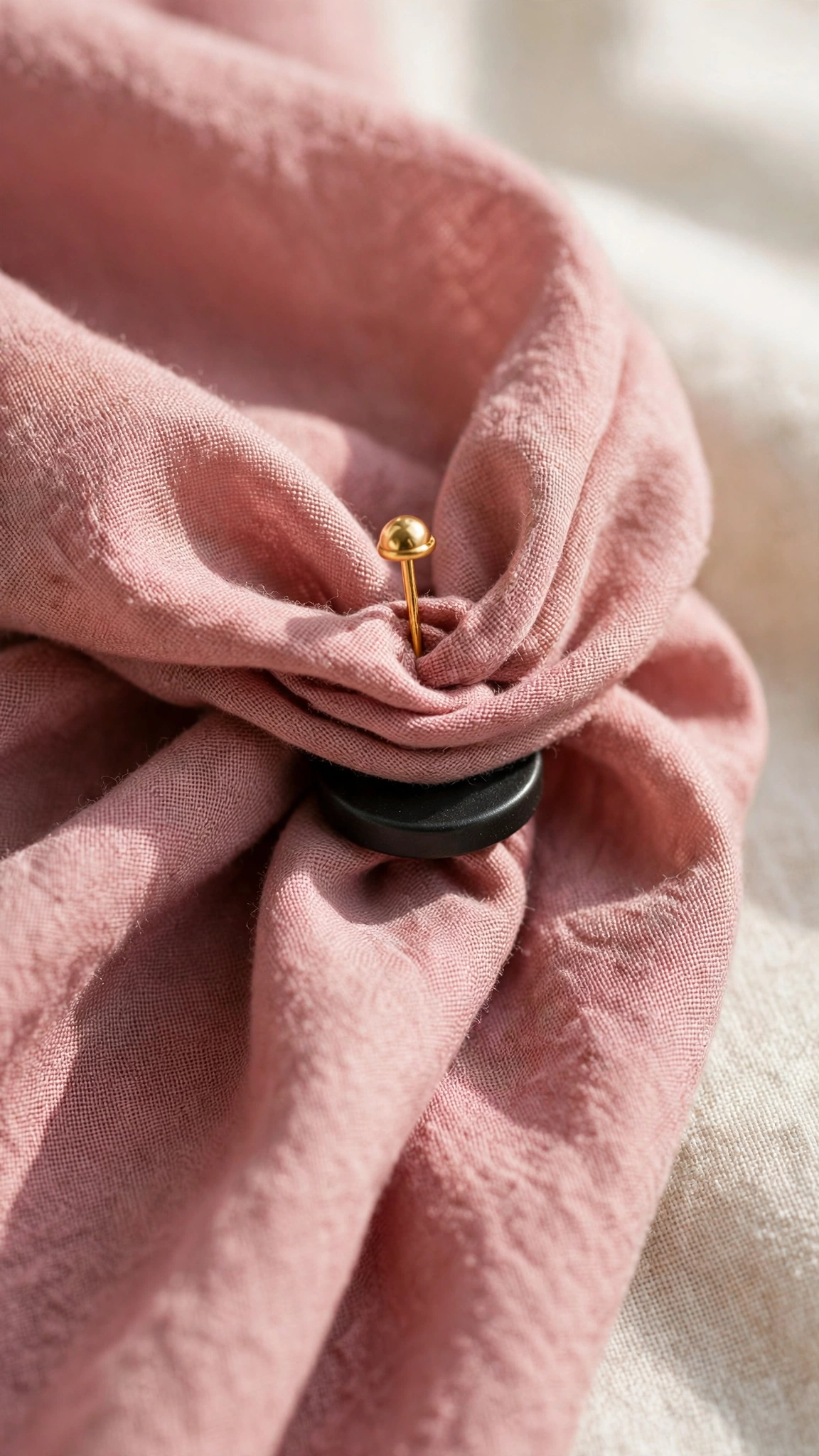
A hijab stays put through layering, not luck. Start with freshly washed hair or a clean underscarf — oily roots make everything slide. Match fabric to grip: cotton and modal underscarves hold chiffon, while a bare head works under jersey. Pin at three anchor points: under the chin, at one temple, and at the crown or nape. Tuck the side edges slightly under at the jaw so they cannot flap loose. Finish by pressing the whole wrap lightly with your palms to settle the folds into place.
Build a tiny rescue kit: two straight pins, one safety pin, a magnet pair, and a folding mirror in a small pouch that lives in your bag. Avoid touching your hijab during the day — every adjustment loosens the anchors a little more. For workouts, switch to a sport underscarf with a silicone grip strip and a stretchy jersey wrap. In humid weather, matte fabrics like cotton and modal outperform silky ones. Once you learn how to wear hijab for beginners step by step, re-pinning once properly beats tugging every ten minutes.
Jersey vs Chiffon: When to Wear Each
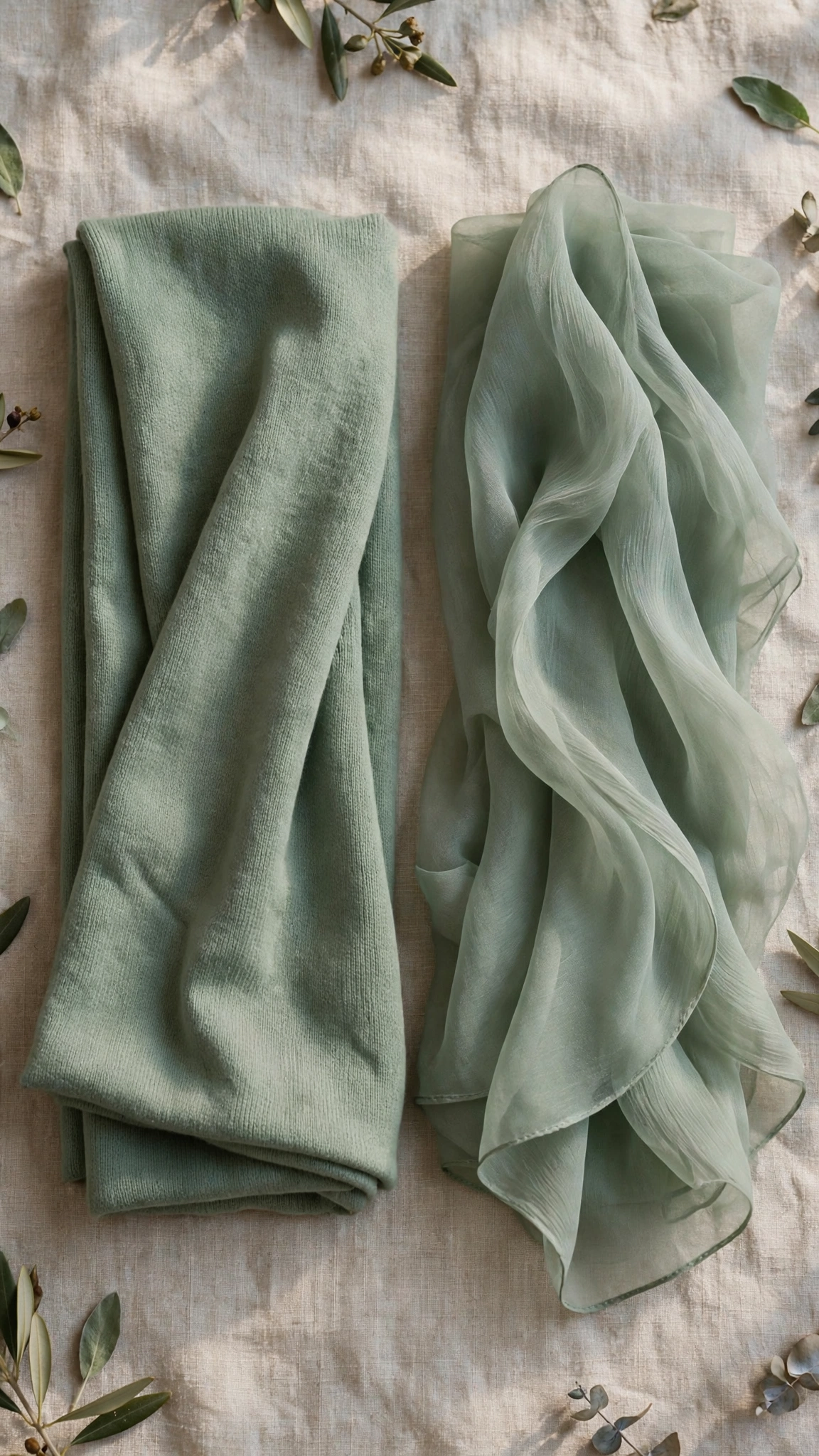
Jersey is the beginner’s best friend: a stretchy knit that is opaque, wrinkle-resistant, and grippy enough to stay put with one pin or none. It suits everyday wear, travel, and work because it moves with you and never needs ironing. Chiffon is the opposite — a featherlight, slightly sheer woven fabric with an elegant flow that elevates dressy outfits. It is slippery, shows the hairline underneath (so wear a full-coverage underscarf), and demands at least two pins. Neither is better; they simply serve different moments. Own both and you are covered year-round.
Reach for jersey on busy mornings, long flights, and casual days — it survives being stuffed in a bag. Save chiffon for weddings, dinners, and photos, where its drape photographs beautifully. When wearing chiffon, always anchor it with a cotton underscarf and pin at the chin and temple; one pin is never enough. Hand-wash chiffon or use a mesh bag, since rough cycles snag the weave. If jersey starts pilling, a five-dollar fabric shaver restores it in minutes. Modal sits between the two: soft like jersey, flowy like chiffon.
Winter Hijab Styling: Warmth Without the Slip
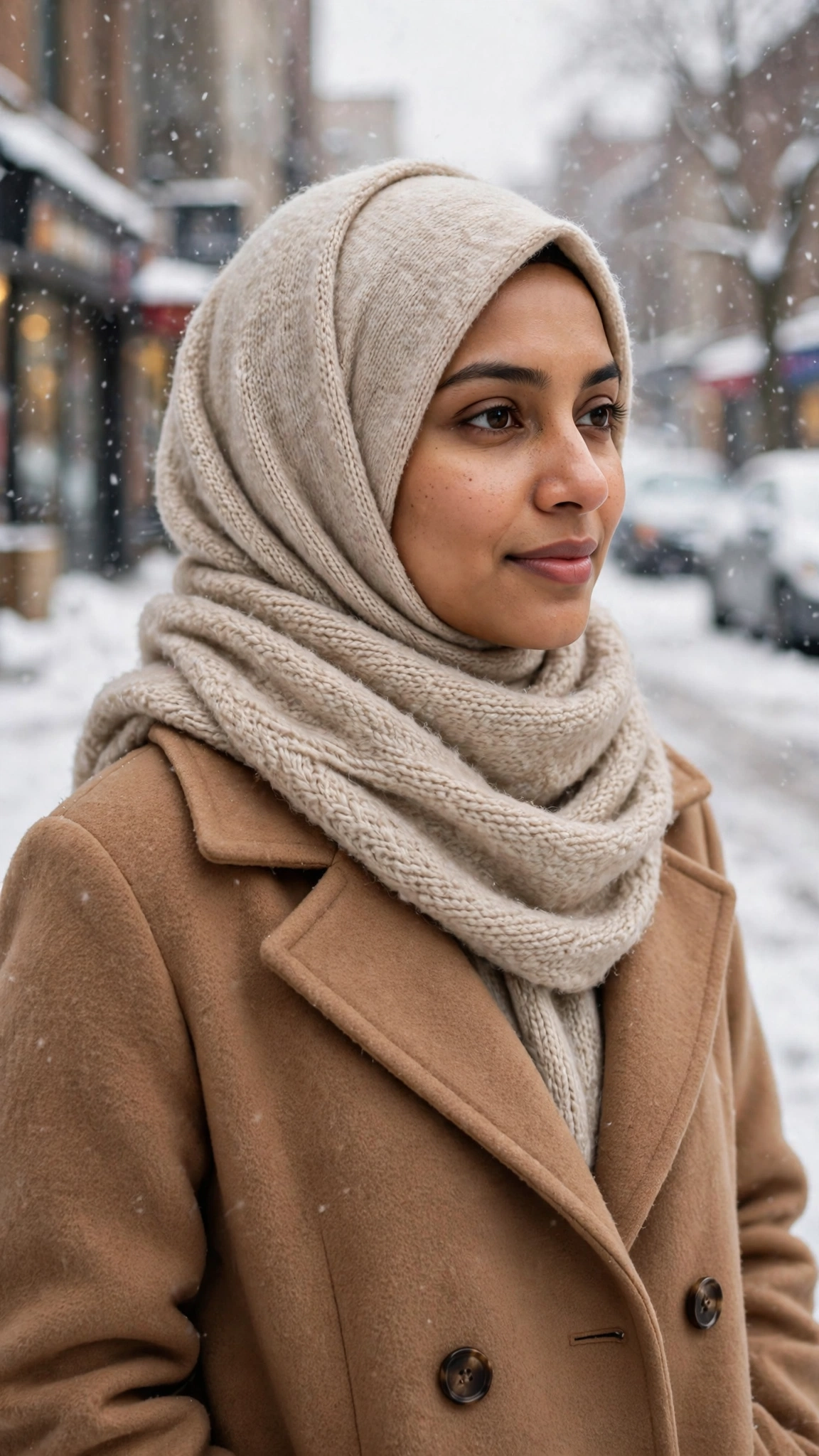
Cold weather adds bulk, and bulk causes slipping — so build warmth in layers. Wear a thin thermal turtleneck as your base, then choose a heavier hijab fabric like thick modal, cotton-velvet, or a wool blend that grips instead of sliding. Avoid silk and satin in winter; they slide off coats and scarves. Drape the hijab with extra length in front and tuck the ends into your coat collar, which anchors everything and seals out drafts. A knit snood-style hijab is the easiest zero-fuss option on truly freezing days.
Static is winter’s biggest annoyance: rub a dryer sheet over the inside of your hijab or lightly mist it with water before heading out. Keep a spare hijab in your bag, because a damp wrap from snow or rain goes limp and slides within minutes. If you wear glasses, position the hijab edge behind the arms so the frames sit securely. A thin fleece beanie worn as an underscarf adds surprising warmth without bulk. And never leave a wet hijab scrunched in a bag — hang it to dry fully to prevent musty smells.
Common Beginner Mistakes to Avoid
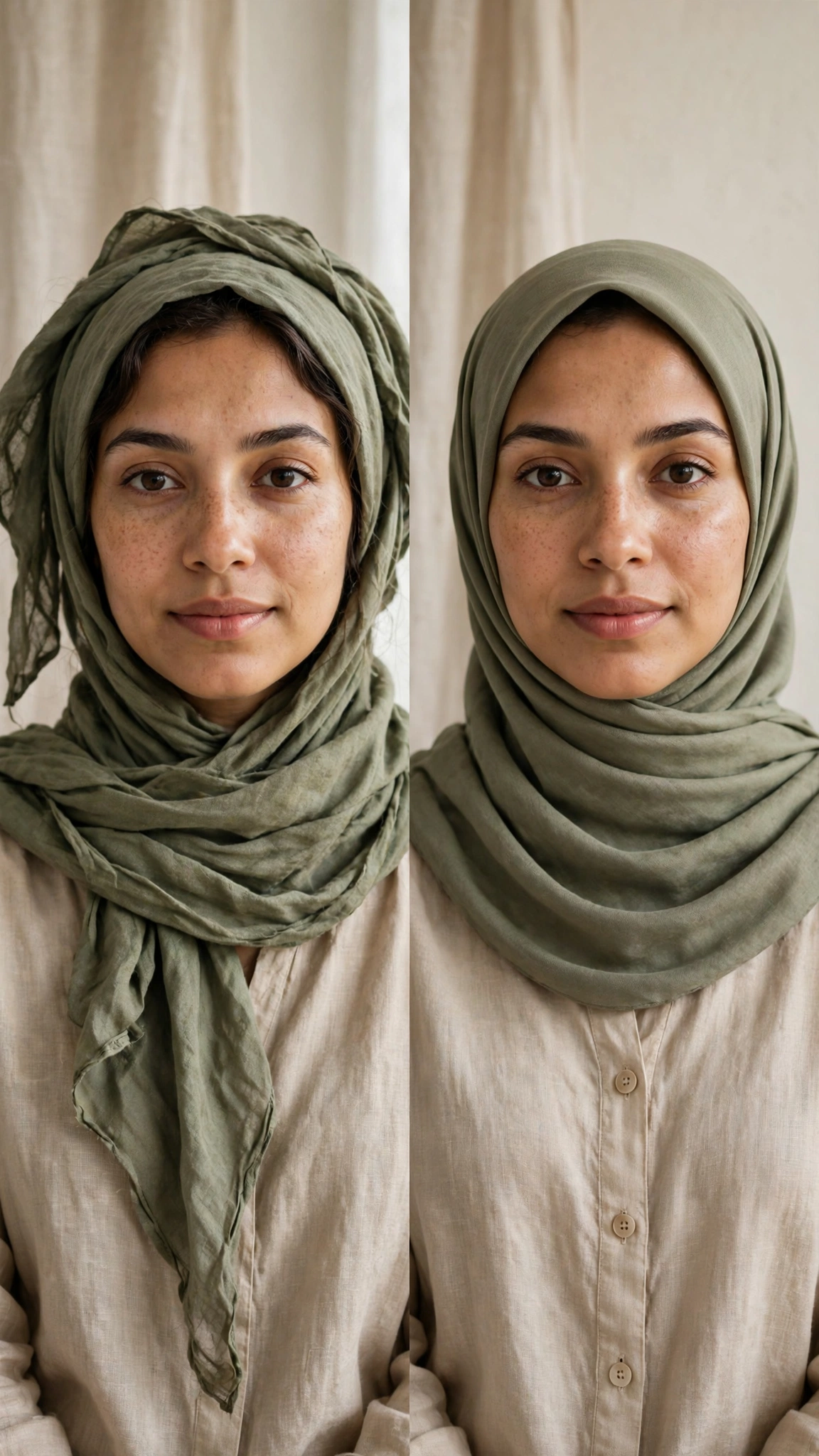
The most common beginner mistakes are all fixable. Wrapping too tightly causes headaches and makes the fabric creep backward — snug is enough. Skipping the underscarf with slippery fabrics guarantees a midday slide. Choosing ultra-sheer chiffon as a first hijab sets you up for frustration; start with forgiving knits. Uneven sides happen when you eyeball the drape without a mirror. And over-pinning — five or six pins where two would do — creates puckers and weakens delicate fabric. Every experienced hijabi has made these exact mistakes. Forgive yourself and keep practicing daily.
Fix the tight wrap by sliding two fingers between the fabric and your forehead — if they do not fit, loosen up. Check your drape from the front, both sides, and the back before leaving home; a thirty-second mirror routine prevents all-day regret. Stop comparing your day-one attempts to influencers with ten years of practice and ring lights. Master one simple style completely before adding a second to your rotation. Give yourself two full weeks of daily practice, and keep a rescue pin in your bag while your muscle memory builds.
Washing and Caring for Your Hijabs
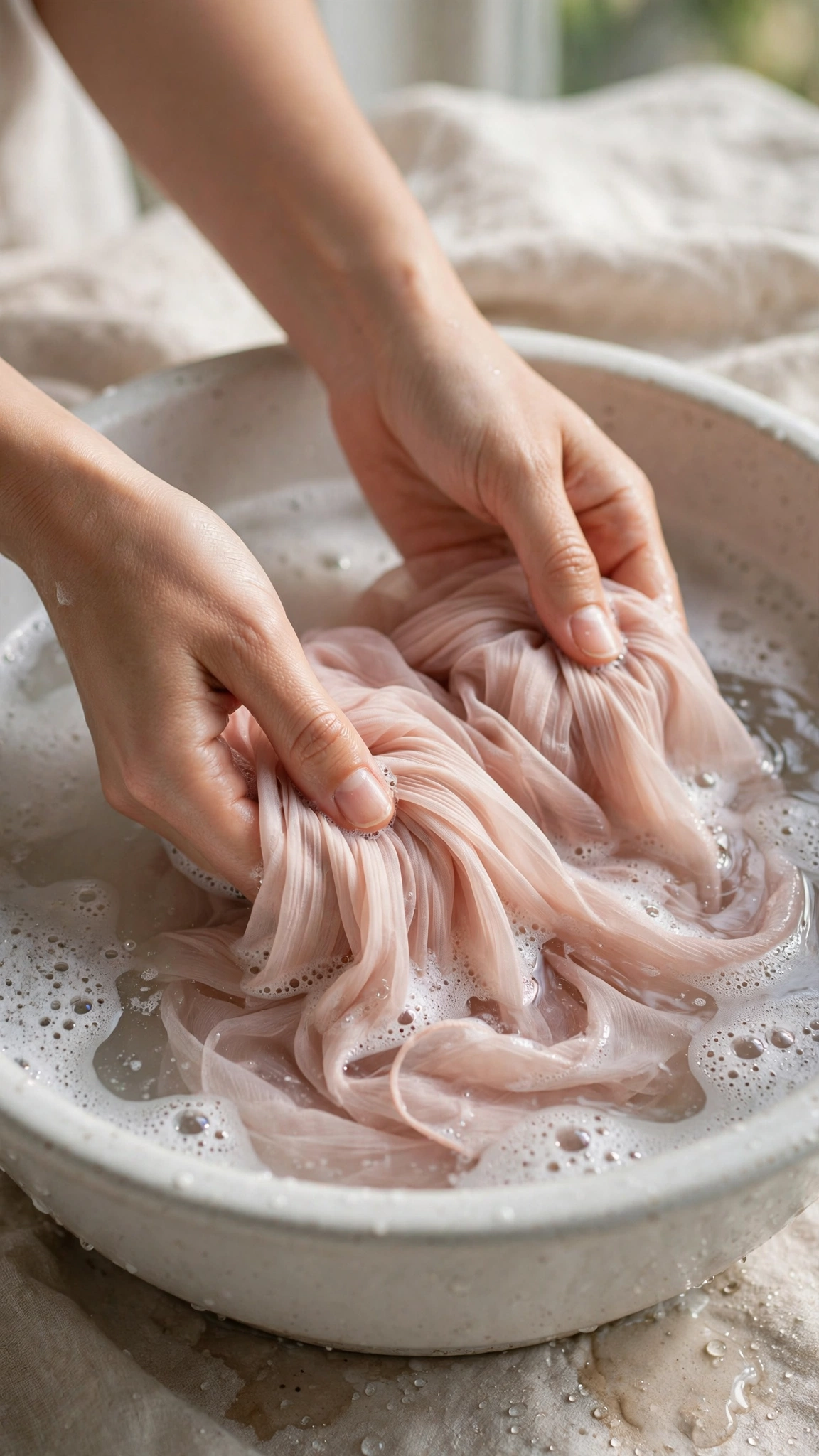
Treat hijabs like delicates and they will last years. Machine-wash on a cold, gentle cycle inside a mesh laundry bag, or hand-wash in cool water with mild detergent — hot water fades dyes and weakens fibers. Never wring chiffon; press it gently in a towel instead. Air-dry everything away from direct sunlight, which bleaches dark colors. Iron only on low heat, and always place a thin cotton cloth between the iron and the hijab to prevent shine marks and scorching on synthetic fabrics like polyester chiffon.
Store hijabs folded or rolled on a shelf rather than hanging — hangers stretch jersey and leave creases in chiffon. Rotate your collection so the same two favorites do not fade while the rest sit pristine. Between wears, hang a worn hijab in fresh air for a few hours instead of washing it every time. Snip loose threads with small scissors instead of pulling them, which unravels the weave. Knowing how to wear hijab for beginners step by step includes knowing when to retire a thinning hijab.
Building a Starter Hijab Collection
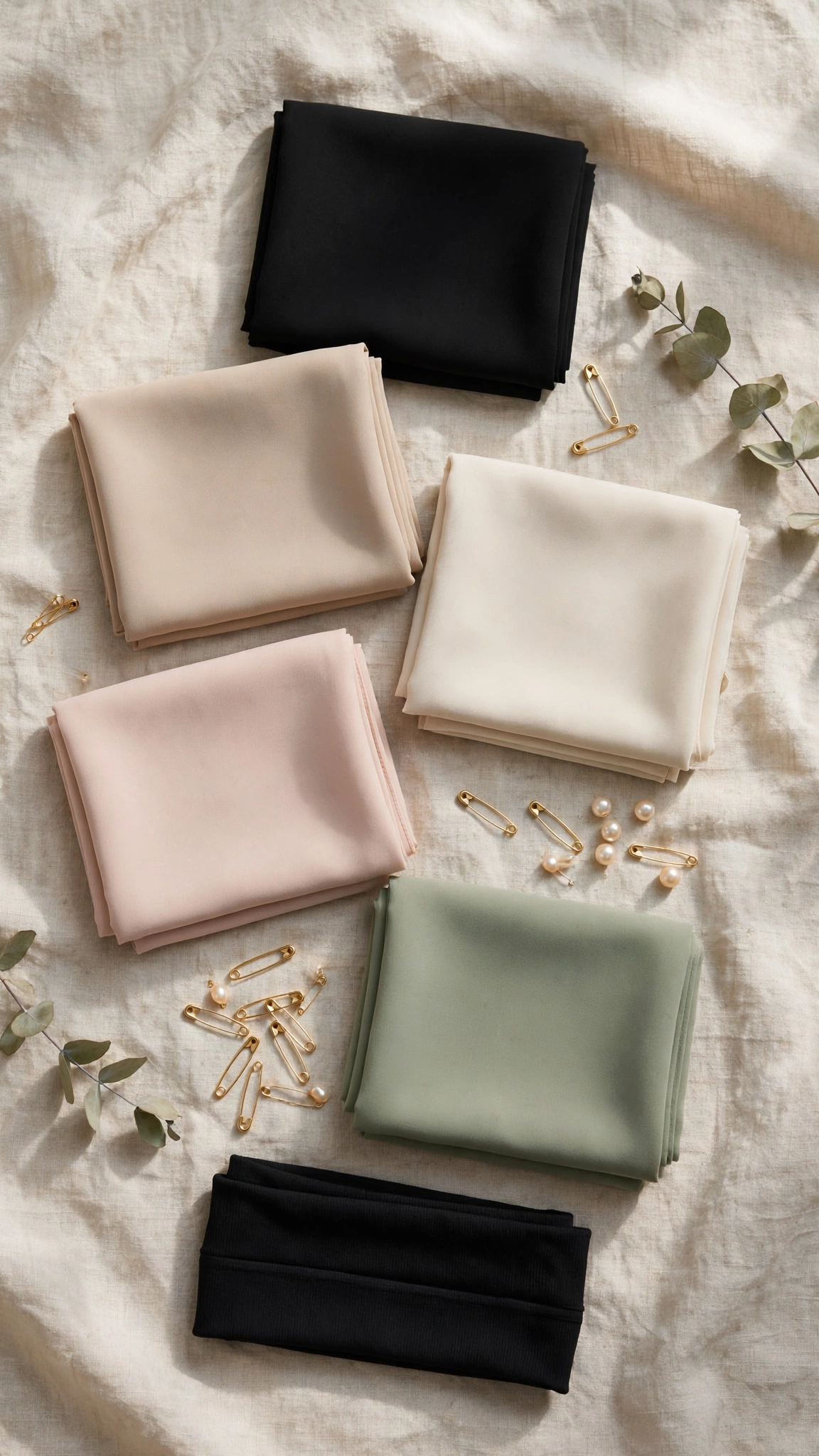
A smart starter collection is small on purpose: five to seven hijabs cover nearly every outfit. Begin with the neutrals you will reach for daily — black, warm beige or taupe, soft grey, and navy — then add one crisp white and one subtle print for variety. Include at least two jerseys for easy days and one chiffon for dressier moments. Choose colors that already live in your wardrobe so every hijab has five outfits waiting. Quality over quantity wins: one well-made wrap outlasts three flimsy ones.
Buy hijabs one at a time so you can judge the fabric and cut before committing to more. Skip the tempting bulk bundles — inconsistent sizing and thin fabric waste more money than they save. Add one new piece a month: a seasonal color in spring, a heavier knit before winter. Keep a simple list on your phone of what you own to avoid buying your fourth beige. Donate or gift the hijabs you never reach for; a tidy collection you actually wear beats a drawer of maybes every time.
Frequently Asked Questions About How to Wear Hijab for Beginners
What is the easiest way to learn how to wear hijab for beginners?
Start with a rectangular jersey hijab and a non-slip underscarf. Jersey grips without many pins, so it is the most forgiving fabric while you practise.
How many pins do I need as a beginner?
Usually two to three — one under the chin and one or two at the side or back. Magnetic pins are a gentle, snag-free option for delicate fabrics.
How long does it take to get comfortable wearing hijab?
Most beginners feel confident within a couple of weeks of daily practice. Stick to one or two simple styles at first, then experiment as you go.
Final Thoughts
Learning how to wear hijab for beginners is all about patience, the right fabric and a couple of go-to styles you can master. For more inspiration, browse our Hijab Styles & Tutorials collection, and don’t miss hijab styles for round faces and modest fall outfits that are actually wearable. You can also read more about the hijab. Save your favourite look to Pinterest so it’s ready when you need it!
One Response