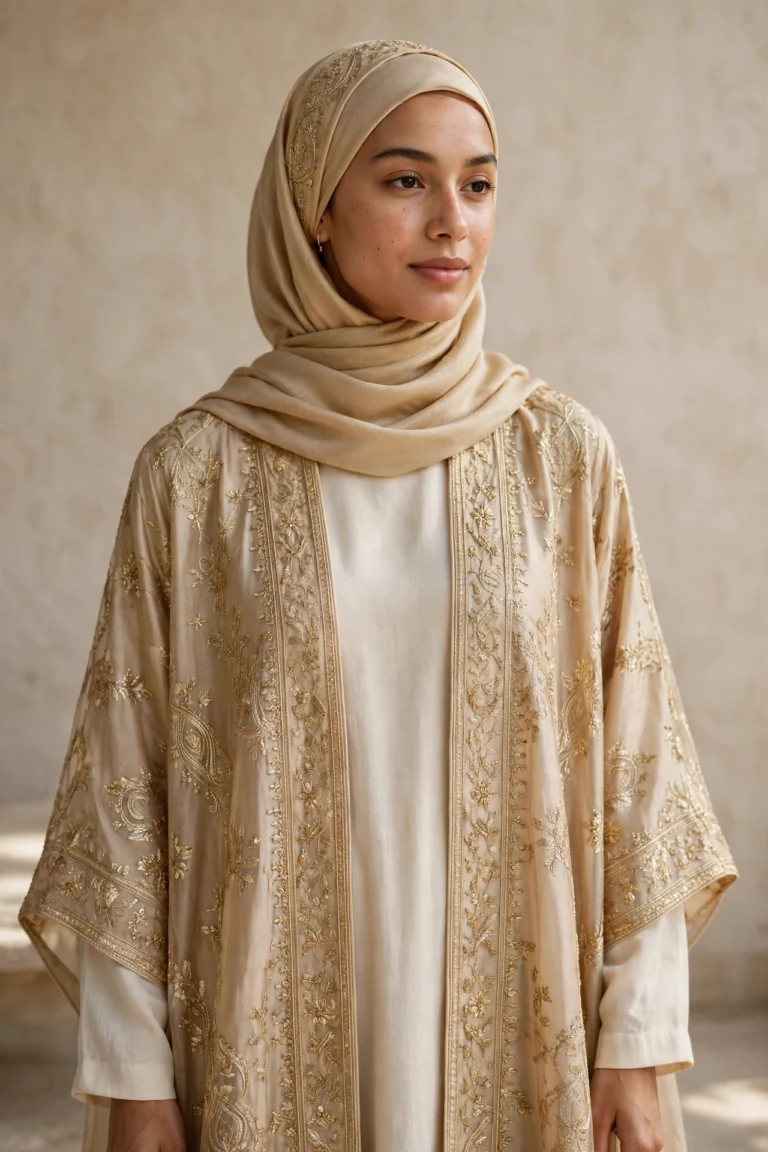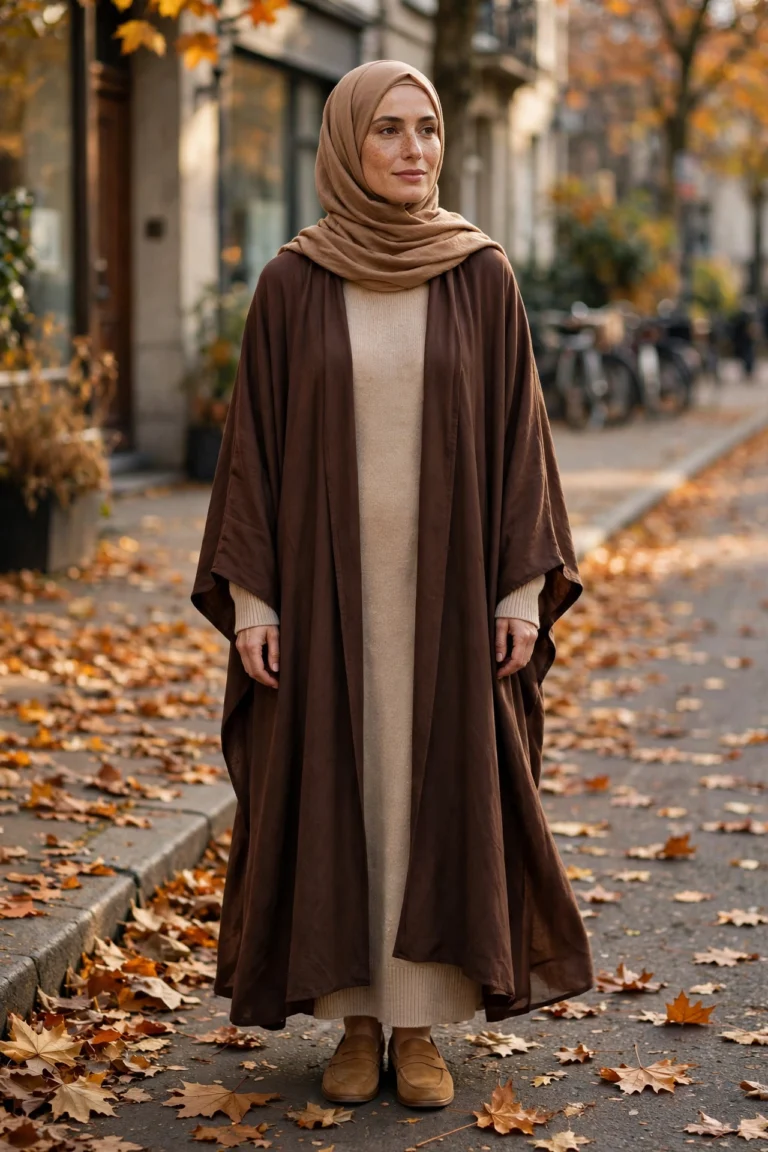
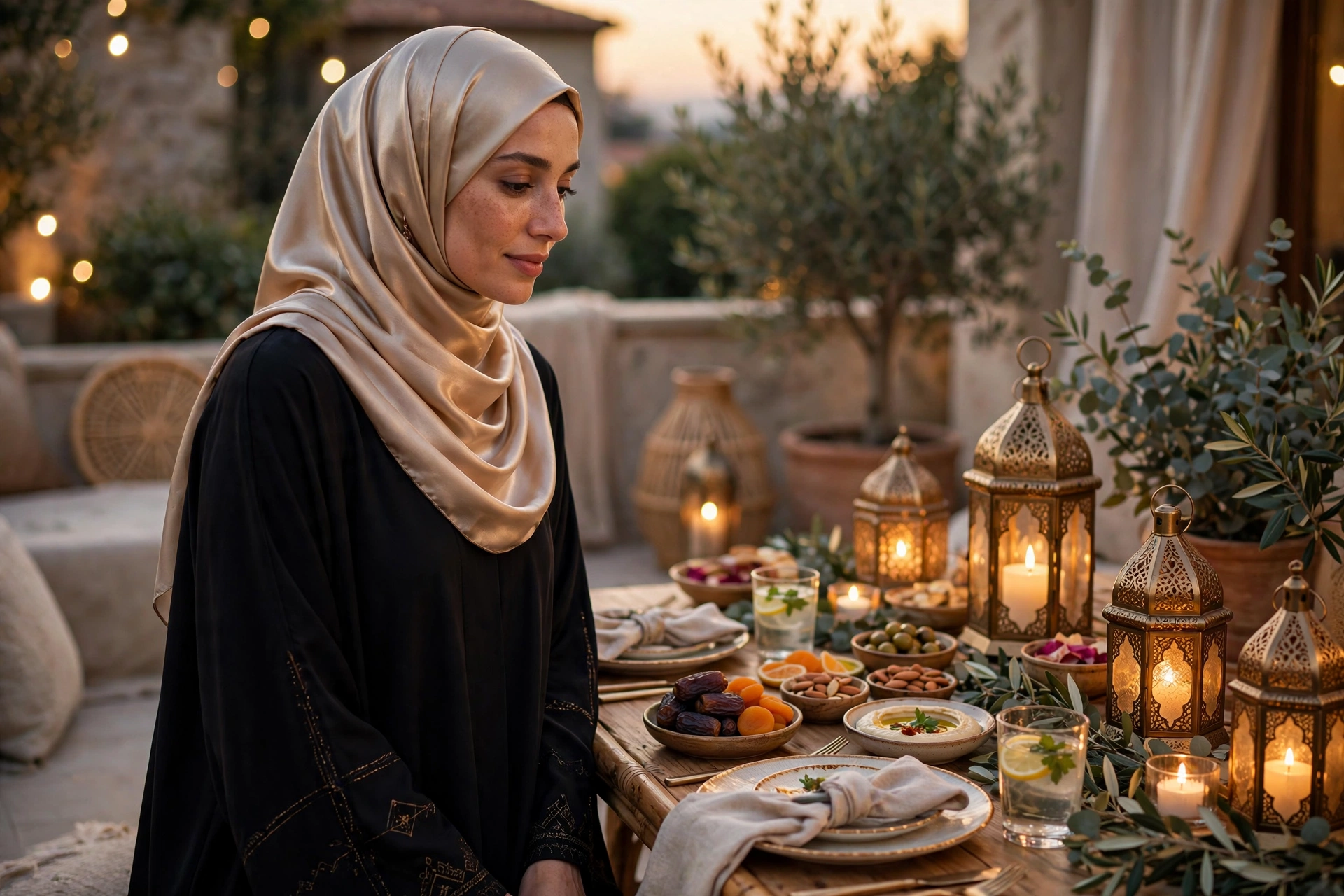
Ramadan brings a month of evenings that feel different from the rest of the year, from quiet family iftars at home to taraweeh nights at the mosque and invitations that arrive all month long. The right outfit makes those evenings easier, because you can move from the dinner table to prayer without changing, adjusting, or worrying about your layers. The best Ramadan looks are built on comfort first, with soft fabrics, loose shapes, and pieces that stay put through a long evening. When your outfit feels effortless, you can focus on the gathering, the food, and the people around you.
This guide gives you fourteen elegant Ramadan outfits for iftar and taraweeh, each one modest with full coverage and easy to wear for hours. You will find classic abayas, satin kaftans, prayer-friendly sets, and polished combinations built from pieces you may already own. Every idea explains what to wear, how to layer it, and which small details make the look feel special. Pick the outfits that suit your routine, and repeat your favorites all month with different colors and accessories. Keep your rotation small and repeatable, so getting dressed stays easy on even the busiest Ramadan evenings.
In This Guide
- 1. The Classic Black Abaya, Elevated for Iftar
- 2. The Satin Kaftan for Iftar Dinners
- 3. The Pastel Abaya for Daytime Gatherings
- 4. The Prayer-Friendly Two-Piece Set
- 5. The Maxi Dress Plus Open Abaya Combo
- 6. The Embroidered Abaya for Special Nights
- 7. The Modest Jumpsuit Alternative
- 8. The Pleated Skirt Plus Tunic Look
- 9. The Monochrome Cream Ensemble
- 10. The Printed Abaya for Family Iftars
- 11. The Velvet Abaya for Evening Gatherings
- 12. The Lightweight Linen Abaya for Warm Evenings
- 13. The Belted Abaya for a Polished Shape
- 14. The Matching Mother-Daughter Iftar Look
- Conclusion
- Frequently Asked Questions About Ramadan Outfits
1. The Classic Black Abaya, Elevated for Iftar
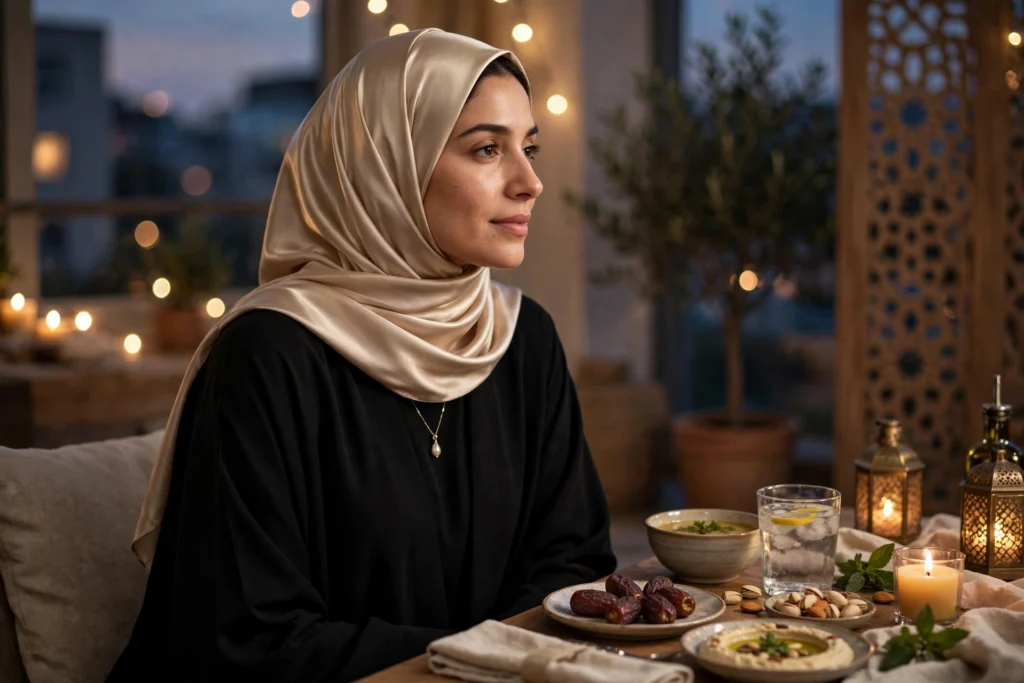
A well-cut black abaya is the hardest-working piece in any Ramadan wardrobe, because it suits every setting from a family iftar to a mosque evening. Choose one in a flowing crepe or nidha fabric with full sleeves and a clean drape, then elevate it with a soft satin hijab in champagne, dusty rose, or silver grey. A delicate pendant, a slim bracelet, and polished flats keep the look refined without feeling overdressed. The black base also makes it easy to repeat the same abaya all month with different hijabs and accessories.
Keep the styling simple, because the elegance of this look comes from the fabric and the fit rather than from heavy decoration. A light spritz of your favorite scent, neat nails, and a structured tote complete the outfit for evenings that move from home to mosque. This outfit works for every age and every gathering, and it photographs beautifully in warm evening light. If you want a little more polish, add a thin metallic belt at the waist or a pair of statement earrings. The classic black abaya never looks out of place during Ramadan.
2. The Satin Kaftan for Iftar Dinners
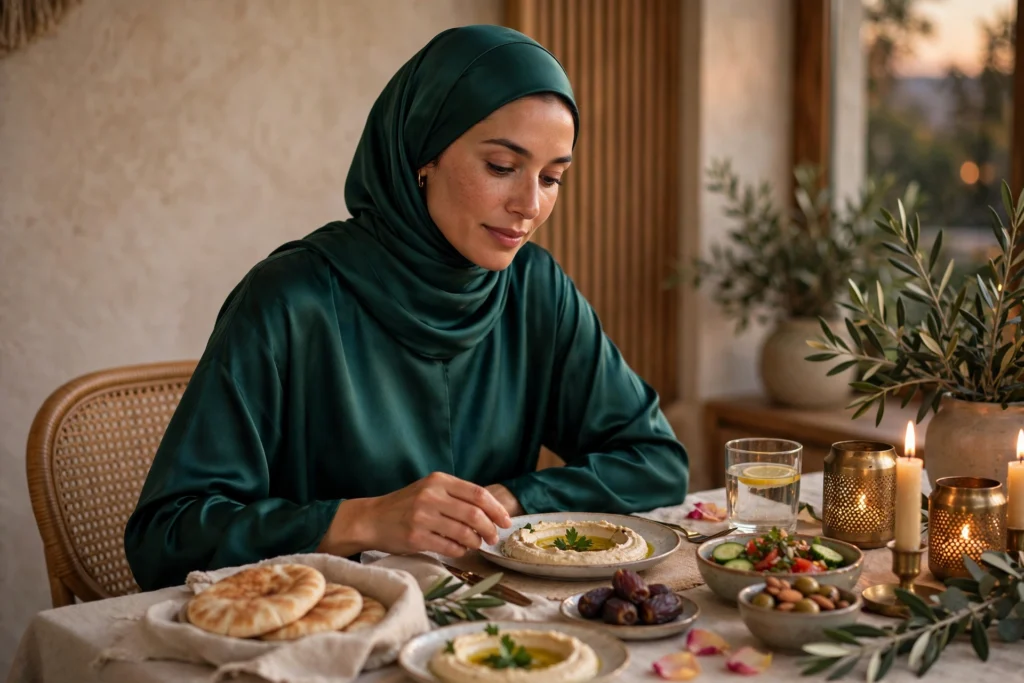
A satin kaftan brings instant elegance to an iftar dinner, with a fluid drape that feels festive yet comfortable through a long meal. Choose a kaftan in deep emerald, midnight navy, or warm burgundy, with long sleeves and a modest neckline that needs no extra layering. Pair it with a matching or tonal hijab, heeled ankle boots or elegant flats, and one statement piece of jewelry, such as a cuff bracelet or a pair of chandelier earrings. The sheen of the satin does the work, so the rest of the styling can stay quiet.
Because satin shows every crease, steam the kaftan before you wear it and hang it rather than folding it in a bag. A small clutch keeps the silhouette clean, and a light shawl in a matching tone adds warmth for cooler evenings. This look suits restaurant iftars, hosted dinners, and any evening where you want to feel dressed up without fuss. You can also reuse the kaftan for Eid with different accessories. A kaftan in a rich, timeless color is an investment piece that earns its place in your wardrobe well beyond Ramadan. A satin kaftan is one of the most rewarding pieces to own during Ramadan.
3. The Pastel Abaya for Daytime Gatherings
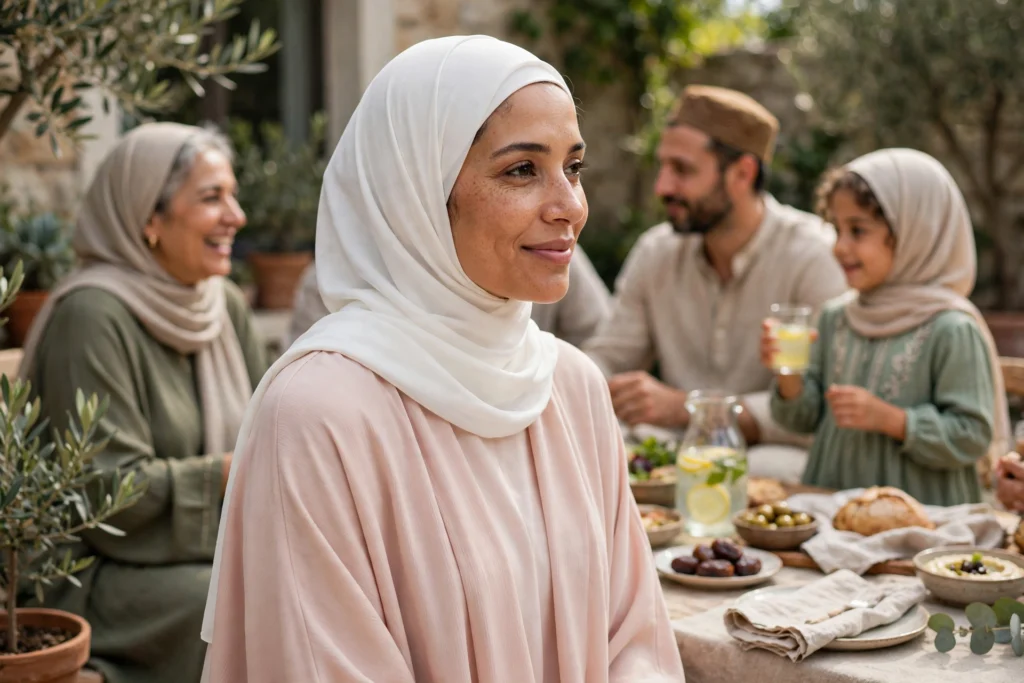
Pastel abayas feel fresh and gentle for daytime Ramadan gatherings, from weekend iftars to afternoon visits with family. Choose a soft blush, sage, lilac, or sky blue abaya in a matte crepe, and pair it with a white or cream hijab for a clean, light finish. White sneakers, nude flats, or low block heels keep the look comfortable, while a small crossbody bag holds your phone, keys, and prayer essentials. The soft color reads calm and welcoming, which suits the mood of a relaxed daytime table. A pastel abaya also pairs beautifully with a white prayer-friendly base underneath, keeping the whole outfit cool and comfortable.
Keep the accessories light, because pastel fabrics look best with delicate jewelry and soft makeup. A thin gold necklace, small stud earrings, and a natural lip color complete the outfit without overpowering it. This look also works beautifully for outdoor iftars and garden gatherings, where the pastel shade glows in natural light. If you prefer more coverage, layer a long-sleeve maxi dress underneath and let the abaya sit open. This flexibility makes a pastel abaya one of the most forgiving pieces to wear through a long Ramadan afternoon. A pastel abaya is an easy way to feel bright during Ramadan days.
4. The Prayer-Friendly Two-Piece Set
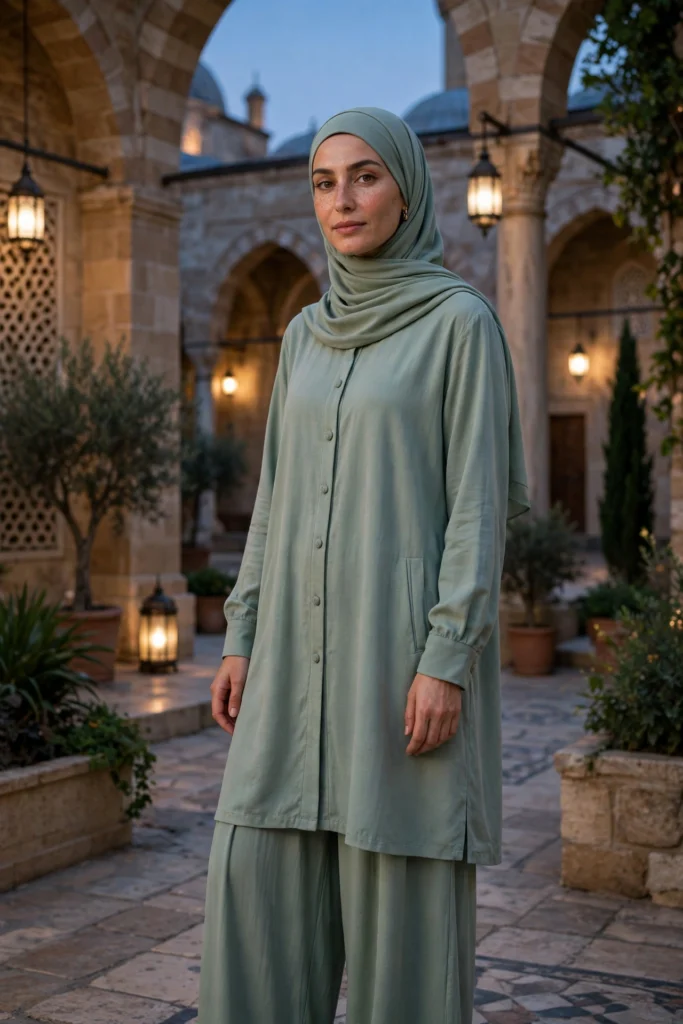
A two-piece set with a long tunic and wide-leg trousers is one of the most practical Ramadan outfits, because it moves easily through prayer and dinner alike. Choose a set in a breathable fabric like crepe or cotton-blend, with a tunic that covers the hips and trousers that sit comfortably at the waist. A jersey hijab in a matching tone stays secure, and slip-on shoes make mosque visits simple. The coordinated set looks polished with almost no styling effort, which is ideal for busy evenings. The set also packs neatly for travel, so it works just as well for iftars away from home.
The beauty of a two-piece set is how easily it adapts across the month, since you can wear the tunic over a skirt one night and the trousers with a different top the next. Add a long open abaya or a lightweight cardigan for cooler evenings, and carry a small tote with a spare hijab pin and tissues. This outfit suits taraweeh nights especially well, because nothing shifts, rides up, or needs adjusting. A two-piece set is the definition of a Ramadan outfit that works as hard as you do.
5. The Maxi Dress Plus Open Abaya Combo
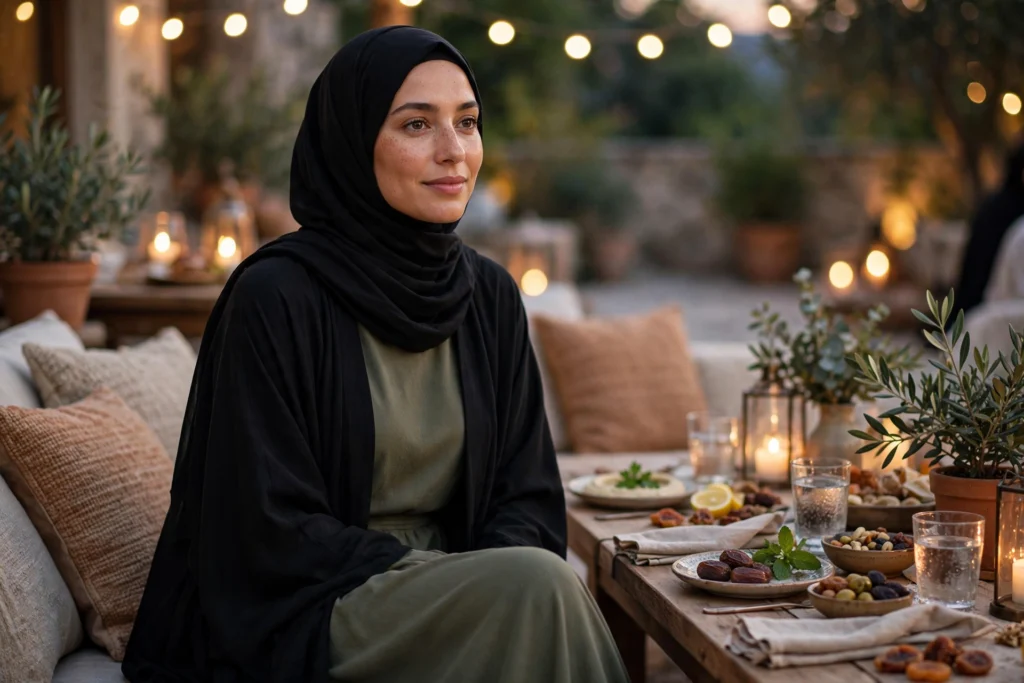
A maxi dress under an open abaya gives you two layers of polish with the comfort of a single outfit. Start with a long-sleeve maxi dress in a solid color or a subtle print, then layer an open abaya in black, navy, or camel over it. The abaya adds movement and coverage, while the dress underneath gives the outfit its color and shape. A tonal hijab, ankle boots, and a structured bag finish the look, which works for iftars, mosque evenings, and family visits alike. The two layers also give you warmth control, since you can adjust the abaya as the evening temperature changes.
This combination is easy to adjust through the evening, since you can remove the abaya indoors if the room is warm and drape it over your shoulders when you head out. Choose fabrics that breathe, like crepe, viscose, or cotton-blend, so the layers feel light rather than heavy. A belt over the abaya can define the waist, or you can leave it open for a relaxed drape. This combo also makes a great travel outfit for visiting family during Ramadan. The maxi dress plus open abaya is a formula you can repeat all month.
6. The Embroidered Abaya for Special Nights
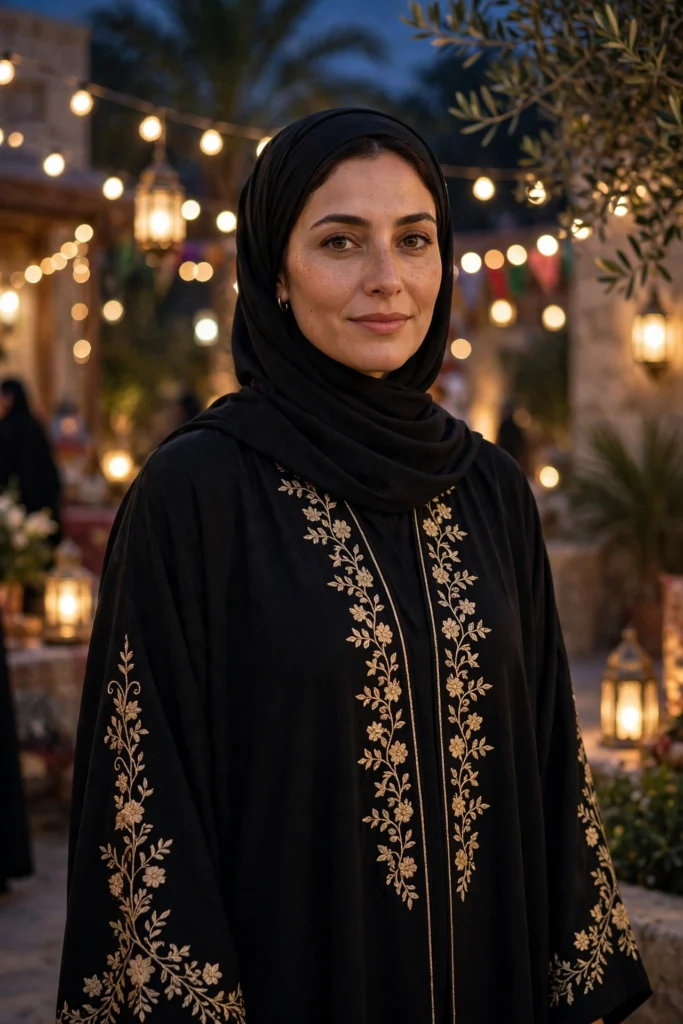
An embroidered abaya turns an ordinary Ramadan evening into a special one, with delicate stitching that catches the light. Choose an abaya with embroidery along the sleeves, the front opening, or the hem, in gold, silver, or tonal thread that stays elegant rather than loud. Pair it with a plain hijab in a matching shade, so the embroidery stays the focus, and keep jewelry minimal with a single bracelet or a pair of studs. Heeled boots or embellished flats complete the look for hosted iftars and celebratory nights. A softly draped hijab in a complementary shade lets the embroidery remain the clear centerpiece of the outfit.
Because the embroidery is the statement, let the rest of the outfit stay quiet, with a simple clutch and soft, natural makeup. This abaya also works beautifully for the last ten nights of Ramadan, when gatherings feel more festive and invitations multiply. Store it on a padded hanger to protect the stitching, and steam it gently rather than ironing directly over the embroidery. An embroidered abaya is a piece you will reach for whenever Ramadan calls for something extra special. It is also a wonderful piece to pass down or save for future Ramadans, since classic embroidery never dates.
7. The Modest Jumpsuit Alternative
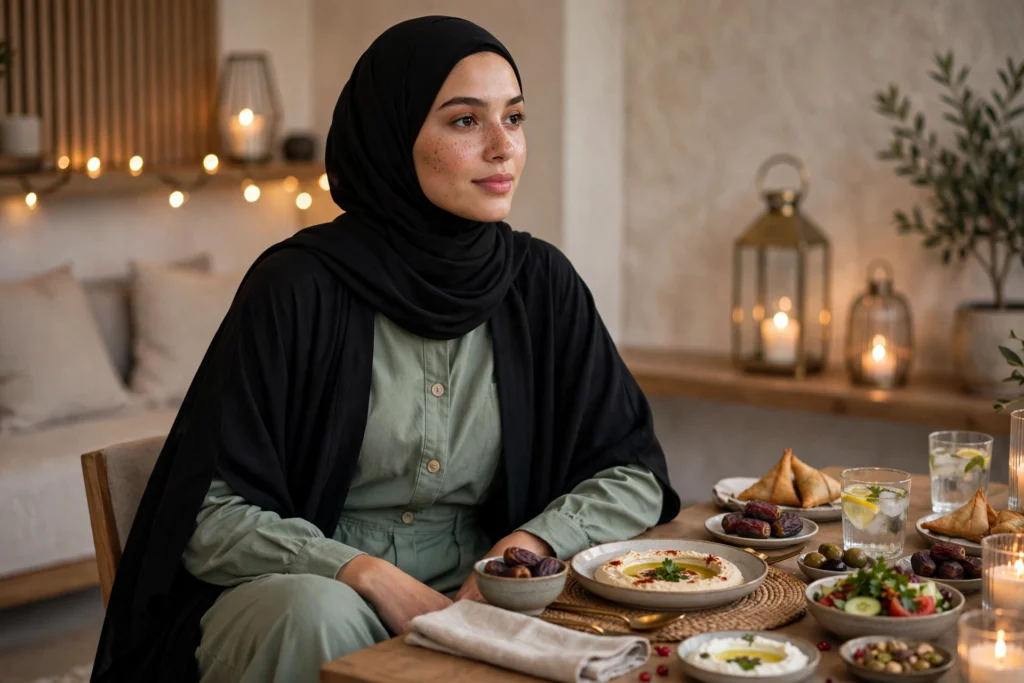
A wide-leg jumpsuit with long sleeves and a high neckline is a modern Ramadan option that feels fresh without sacrificing coverage. Choose one in black, navy, or olive, in a fluid fabric that drapes rather than clings, and layer an open abaya or a long cardigan over it for extra coverage. A hijab in a matching tone, heeled ankle boots, and a structured bag keep the look polished for iftar dinners and evening gatherings. The jumpsuit gives you a clean, contemporary silhouette with none of the fuss of separates. The jumpsuit also layers neatly under an abaya, giving you a second outfit from the same base piece.
The key to making a jumpsuit Ramadan-ready is the fit, so look for a wide leg, a defined waist, and sleeves that reach the wrist. A belt over the abaya or a long necklace adds shape without breaking the modest line. This outfit is especially practical for evenings that involve a lot of movement, from setting the table to heading out for taraweeh. You can also dress it down with sneakers for a casual family iftar. A modest jumpsuit proves that Ramadan style can feel modern and comfortable at once.
8. The Pleated Skirt Plus Tunic Look
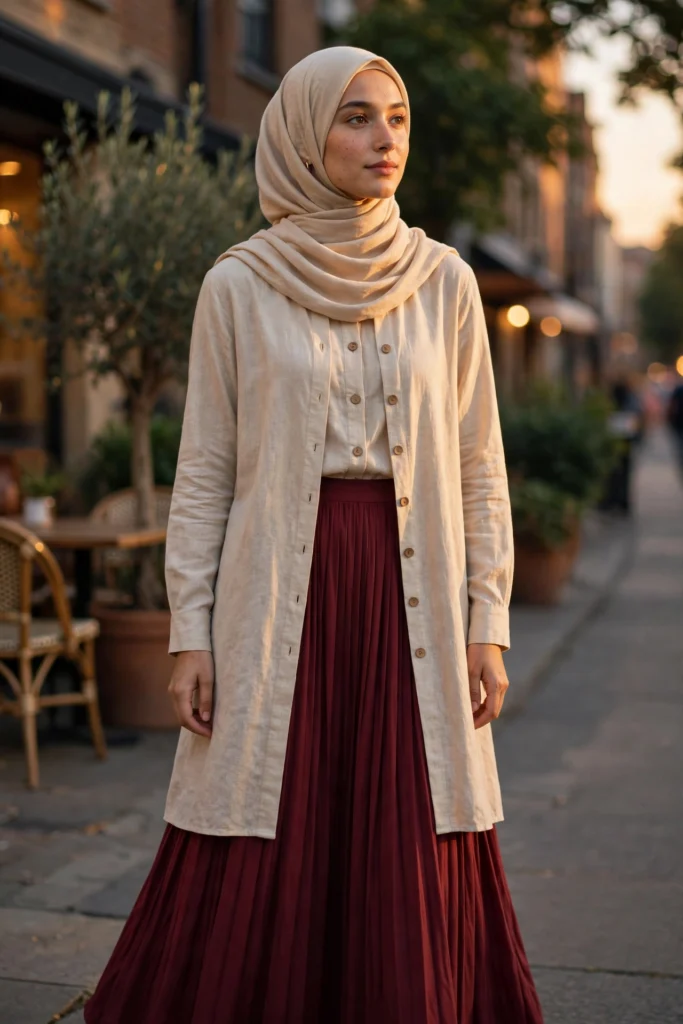
A pleated skirt with a long tunic is a graceful Ramadan combination that moves beautifully and stays comfortable for hours. Choose a pleated maxi skirt in a neutral shade like taupe, navy, or burgundy, and pair it with a tunic that falls past the hips in a complementary tone. A hijab in one of the two colors ties the outfit together, while ankle boots or loafers keep it practical for mosque evenings. The pleats add texture and movement, so the outfit looks interesting even with simple accessories. The movement of the pleats photographs beautifully too, which makes this look a favorite for iftar pictures.
This look works for both casual and formal Ramadan evenings, since you can dress it up with a statement necklace or keep it simple with studs. A long cardigan or open abaya adds warmth for cooler nights, and a crossbody bag keeps your hands free. The pleated skirt is also easy to pack for travel, since it folds without creasing badly. If you want a softer finish, choose a tunic in a knit fabric and a skirt in satin. Mixing textures like this keeps a two-color outfit from ever looking flat. The pleated skirt plus tunic is a timeless Ramadan pairing.
9. The Monochrome Cream Ensemble
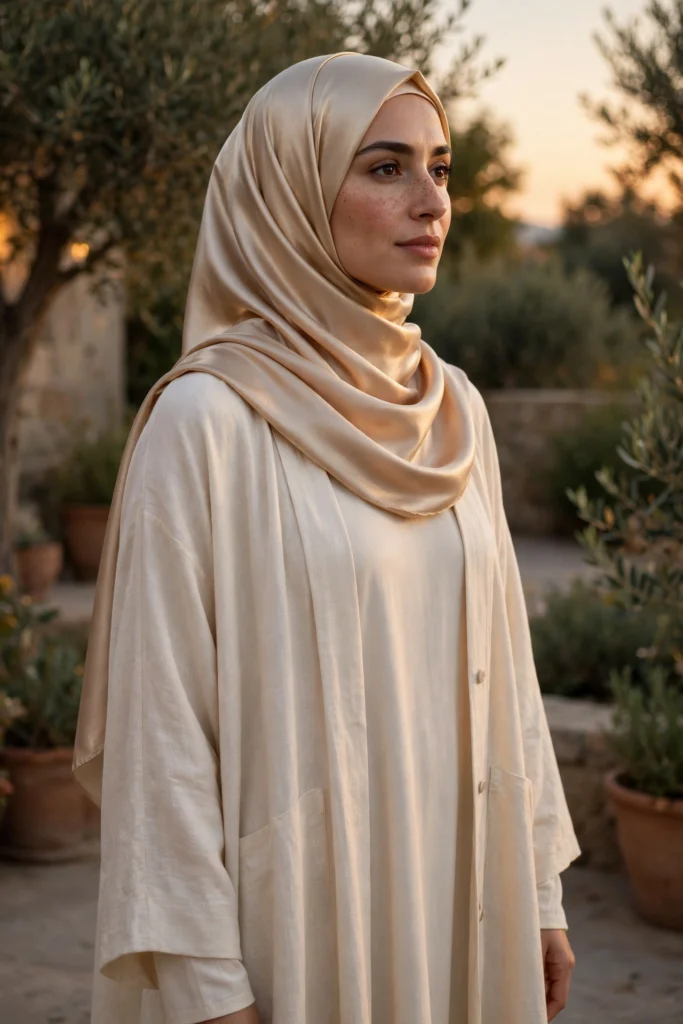
A monochrome cream outfit feels calm, luminous, and quietly luxurious for Ramadan evenings. Start with a cream or ivory abaya over a cream maxi dress or a cream tunic with wide-leg trousers, and add a cream or champagne hijab in a soft jersey or satin. Nude or gold-toned accessories, from earrings to sandals, keep the palette seamless, while a woven clutch adds gentle texture. The single-color approach makes the outfit look intentional and elegant with very little effort. The cream palette also pairs gracefully with gold, rose gold, or pearl accessories, depending on your mood.
Cream tones glow in evening light, which makes this look especially beautiful for iftar photos and mosque evenings. Keep the fabrics matte or softly textured rather than shiny, so the outfit reads refined rather than bridal. A light gold bracelet or a pair of pearl studs adds a finishing touch without breaking the monochrome spell. This outfit also transitions beautifully into Eid, since cream pairs with almost any accent color. A cream outfit also layers well under a camel or navy coat for cooler Ramadan nights. A monochrome cream ensemble is Ramadan elegance at its simplest.
10. The Printed Abaya for Family Iftars

A printed abaya brings warmth and personality to family iftars, where the mood is relaxed and cheerful. Choose a subtle floral, geometric, or abstract print in tones that flatter you, with a loose cut and full sleeves for easy wear. Pair it with a solid hijab pulled from one of the print colors, so the outfit feels coordinated rather than busy. Flat sandals or loafers keep the look comfortable for long evenings at home, and a small tote holds everything you need. A printed abaya also hides small spills and creases better than a plain one, which helps at a busy family table.
Keep the accessories simple, because the print already carries the outfit, and let one color from the pattern guide your hijab and shoes. This abaya is perfect for iftars with extended family, where you want to look festive without feeling overdressed. It also photographs beautifully around a full dinner table, since the print adds life to group pictures. If you prefer a quieter version, choose a tonal print in shades of one color. A printed abaya makes family iftar feel like a celebration. It is also easy to dress down with sneakers when the gathering moves outdoors after dinner.
11. The Velvet Abaya for Evening Gatherings
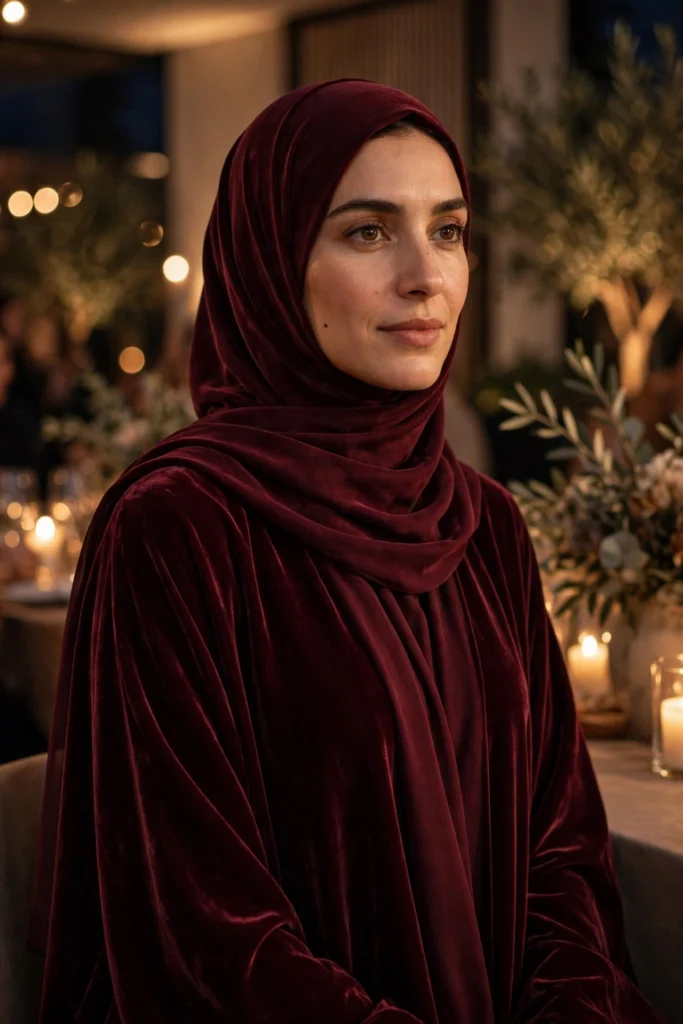
A velvet abaya brings depth and richness to Ramadan evening gatherings, with a texture that looks luxurious in low light. Choose one in deep burgundy, forest green, or midnight navy, with a clean cut and full sleeves that let the fabric speak. Pair it with a satin or jersey hijab in a matching tone, heeled boots, and a single piece of statement jewelry, such as a bold cuff or long earrings. The velvet finish feels festive without needing extra decoration. The texture of velvet catches candlelight and lantern glow, which makes it ideal for evening iftars.
Velvet can feel warm, so this abaya suits air-conditioned dinners and cooler evenings rather than hot outdoor iftars. Hang it carefully to keep the pile smooth, and avoid folding it for long periods. A small clutch and soft makeup complete the look, which also works beautifully for the final nights of Ramadan and Eid eve gatherings. If you want to soften the richness, layer a light shawl in a neutral tone over your shoulders. A velvet abaya also pairs beautifully with satin or silk hijabs, which echo the richness of the fabric. A velvet abaya is Ramadan evening dressing at its most elegant.
12. The Lightweight Linen Abaya for Warm Evenings
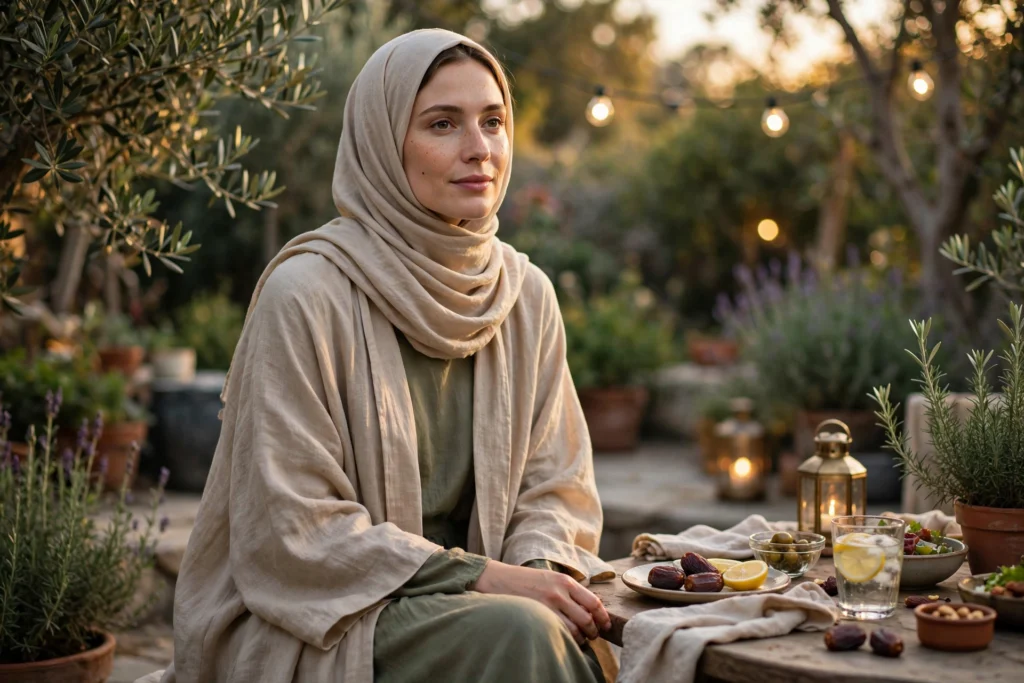
A lightweight linen abaya is the answer to warm Ramadan evenings, when heavy fabrics feel unbearable. Choose a linen-blend abaya in sand, olive, or soft white, with a relaxed cut and full sleeves that still allow air to circulate. Layer it over a sleeveless-friendly base like a long-sleeve maxi dress, and pair it with a breathable cotton hijab in a matching tone. Flat sandals and a woven bag keep the look cool and relaxed for outdoor iftars and garden evenings. A linen abaya also dries quickly if you are caught in a light evening shower on the way to iftar.
Linen wrinkles easily, so embrace the soft, lived-in texture rather than fighting it, and hang the abaya right after washing. A thin belt can add shape, or you can leave the abaya open for maximum airflow. This outfit is ideal for regions where Ramadan falls in warmer months, and for evenings spent outdoors with family. Add a pair of sunglasses for the walk to iftar, and keep jewelry minimal. A pair of simple stud earrings and a single bracelet is all this relaxed outfit needs. A lightweight linen abaya makes warm Ramadan evenings feel effortless.
13. The Belted Abaya for a Polished Shape
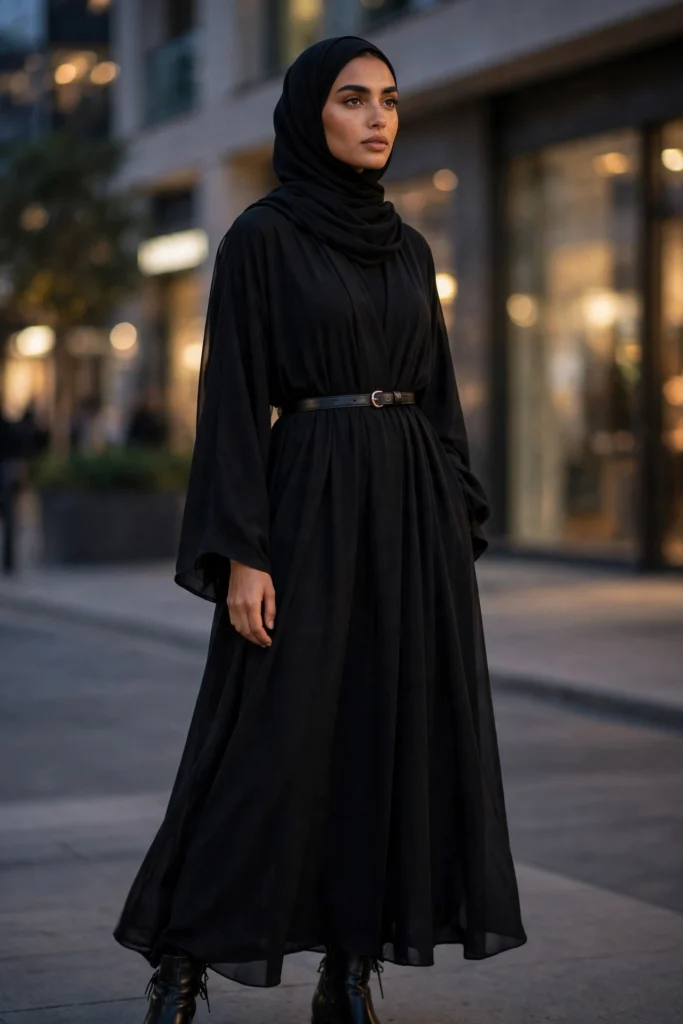
A belted abaya gives a classic Ramadan silhouette a polished, defined shape without losing any coverage. Start with a flowing abaya in black, navy, or taupe, then add a slim leather or fabric belt at the natural waist, worn over the abaya. A hijab in a matching or tonal shade, ankle boots, and a structured bag complete the look, which works for iftar dinners, mosque evenings, and hosted gatherings. The belt turns a simple abaya into an outfit with intention and structure. The belt also creates a natural break in the fabric, which photographs well in evening light.
Choose a belt that sits comfortably and stays put, since you will wear it through a long evening of sitting, standing, and prayer. A wide belt creates a bolder shape, while a slim belt keeps the look subtle and refined. If you prefer a softer finish, use a fabric sash tied at the side instead of a stiff belt. This styling trick works with almost any abaya you already own, which makes it one of the easiest Ramadan upgrades. A belted abaya is proof that small details make a big difference.
14. The Matching Mother-Daughter Iftar Look
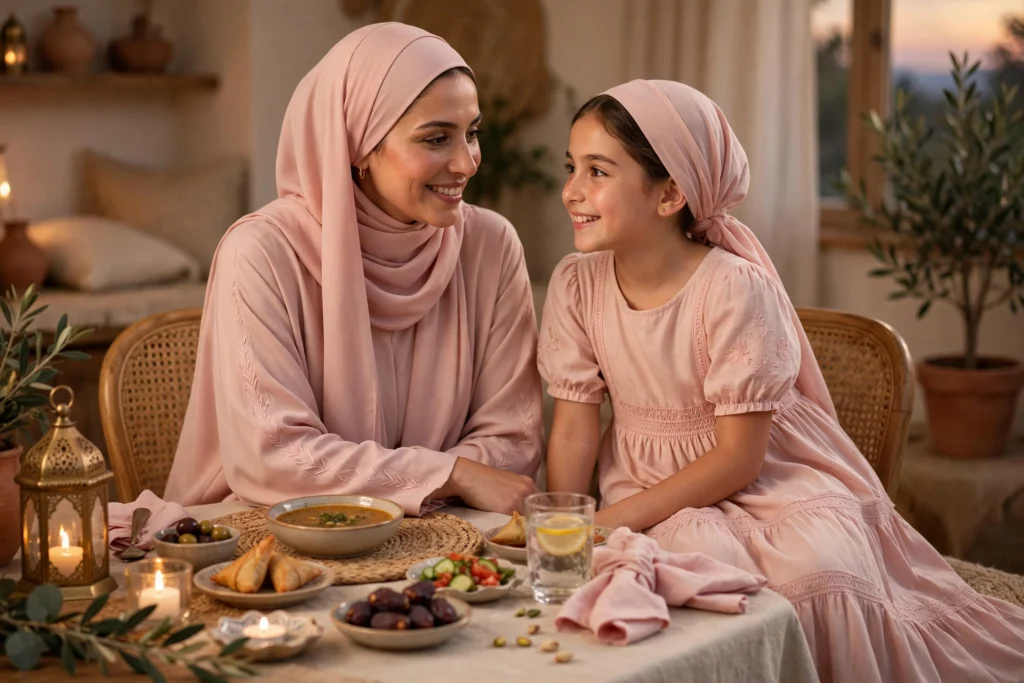
Matching mother-daughter outfits make Ramadan iftars feel extra special, especially for family photos and festive evenings. Choose a shared color, like blush, sage, or navy, and dress in coordinating rather than identical pieces, such as a mother in an abaya and a daughter in a matching maxi dress. Keep the fabrics similar and the hijabs in the same family of shades, so the pair looks connected without feeling like costumes. Comfortable shoes and small matching accessories, like a shared bracelet style, tie the looks together. Keep the shared palette soft and simple, so the matching feels sweet rather than staged.
The key to matching well is coordination, not duplication, so let each person wear the shape that suits them best. A mother might choose a flowing abaya while a daughter wears a pleated skirt with a tunic, both in the same palette. This approach works for sisters and friends too, and it makes group photos at iftar feel joyful and intentional. Matching outfits also make it easier to spot each other in a busy mosque courtyard or market. Keep the palette to two or three shades so the match reads elegant. Matching mother-daughter looks turn an ordinary iftar into a memory.
Conclusion
The best Ramadan outfits share three qualities: they feel comfortable for hours, they move easily from iftar to taraweeh, and they let you focus on the evening rather than on your clothes. Whether you reach for a classic black abaya, a satin kaftan, or a prayer-friendly two-piece set, the right outfit is the one that fits your routine and makes you feel at ease. An outfit that fits your evening, rather than fighting it, is always the most elegant choice. Small details, like a tonal hijab, a slim belt, or one statement piece, can transform pieces you already own into something that feels new.
Build a small rotation of Ramadan favorites this month, and repeat them with different colors and accessories across the weeks. Keep one outfit ready for last-minute invitations, and one dressed-up option for special nights, so you are never caught without something beautiful to wear. With these fourteen ideas, you have a full month of elegant, modest looks waiting in the wardrobe you already own. May your Ramadan evenings feel calm, beautiful, and completely stress-free. This Ramadan, let your wardrobe work quietly in the background while you enjoy every gathering, meal, and prayer.
Frequently Asked Questions About Ramadan Outfits
What should I wear to iftar?
Choose something comfortable and modest with full coverage, like an abaya, a kaftan, or a maxi dress with layers. Soft fabrics and loose shapes work best, since iftar evenings run long and often continue into taraweeh.
What is a good outfit for taraweeh?
A prayer-friendly outfit with secure layers works best, such as a two-piece set, a maxi dress with an open abaya, or a long tunic with wide-leg trousers. Choose slip-on shoes and a hijab that stays put, so you can move easily.
How can I dress up an abaya I already own?
Add a tonal hijab, a slim belt, one statement piece of jewelry, and polished shoes to refresh an abaya you already own. Small details like a clutch or a light shawl can make the same abaya feel new.
Can I repeat outfits during Ramadan?
Yes, repeating outfits is completely normal during Ramadan, and most people build a small rotation of favorites. Change the hijab, accessories, or outer layer to give the same base outfit a fresh feel each time.
Keep Reading